


- admin
- July 6, 2026
- No Comments
Blog Details
What Happens During a Colposcopy? Everything You Need to Know
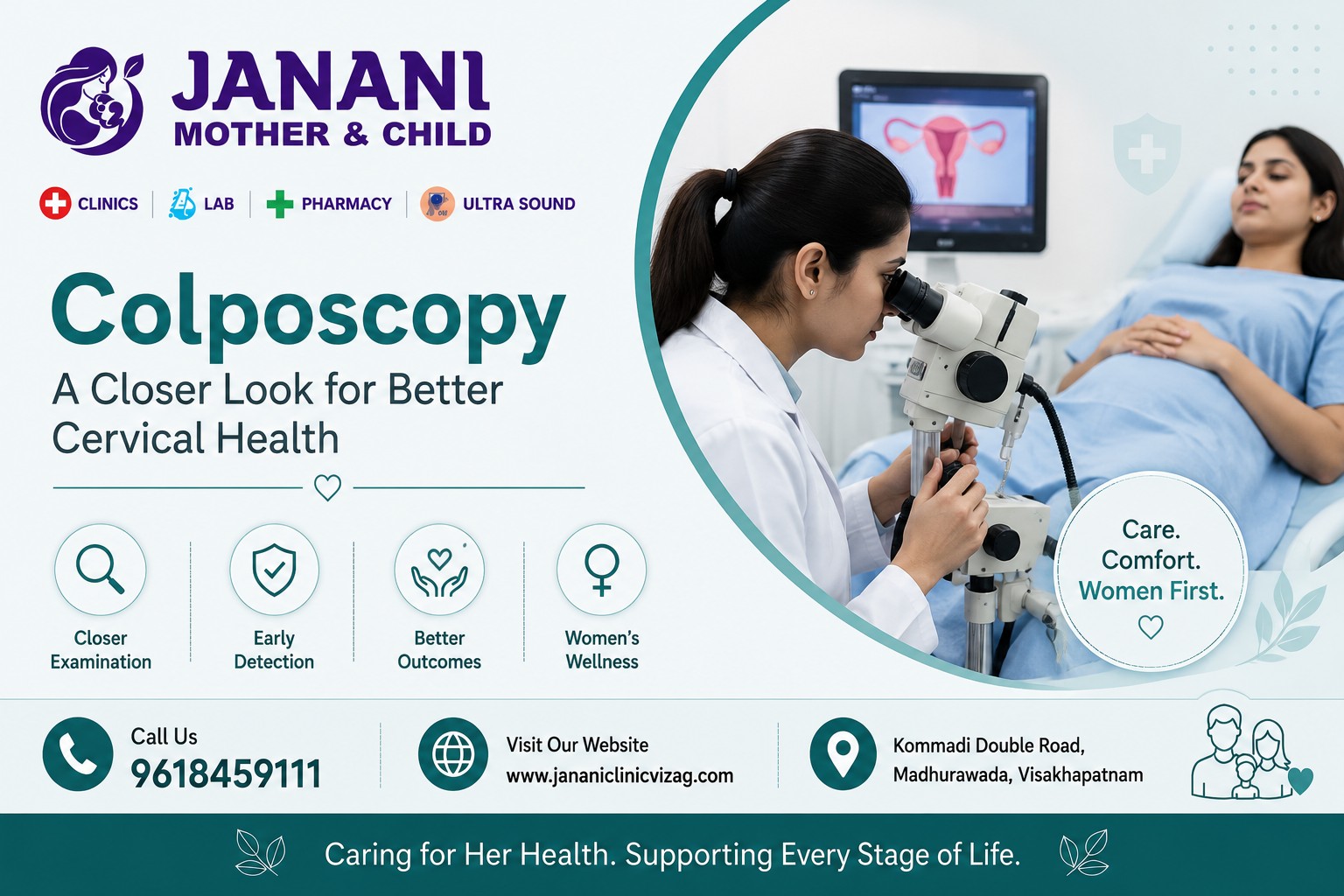
Hearing that you need a colposcopy can feel worrying, especially if you’re unfamiliar with the procedure. However, a colposcopy is a safe, routine examination that helps your gynecologist take a closer look at the cervix, vagina, and vulva to identify any abnormal changes that may need further evaluation.
At Janani Mother & Child Hospital, Dr. Chelamkuri Mrudula performs colposcopy with care, compassion, and respect for your comfort. Understanding what to expect can help ease anxiety and make the experience much less stressful.
What is a Colposcopy?
A colposcopy is a diagnostic procedure in which your doctor uses a special instrument called a colposcope to closely examine the cervix. The colposcope remains outside the body and acts like a magnifying device with a bright light, allowing the doctor to see areas that are not visible during a routine pelvic examination.
The procedure itself is generally quick, painless, and performed in the outpatient clinic.
Why Might You Need a Colposcopy?
Your doctor may recommend a colposcopy if:
▸ Your Pap smear results are abnormal.
▸ Your HPV (Human Papillomavirus) test is positive.
▸ You have unexplained bleeding after intercourse.
▸ There are visible changes on the cervix during a routine examination.
▸ You need further evaluation after cervical screening.
A colposcopy helps determine whether additional treatment or monitoring is needed.
How Should You Prepare?
Preparing for a colposcopy is simple.
Before your appointment:
▸ Schedule the procedure when you are not menstruating, if possible.
▸ Avoid vaginal creams, medications, or douching for 24–48 hours unless advised otherwise.
▸ Avoid sexual intercourse for 24–48 hours before the examination.
▸ Wear comfortable clothing.
▸ You may wish to take a sanitary pad with you, especially if a biopsy is performed.
If you are pregnant, inform your doctor before the procedure.
What Happens During the Procedure?
A colposcopy usually takes about 15–20 minutes.
During the examination:
▸ You will lie comfortably on an examination table, similar to a routine pelvic exam.
▸ A speculum is gently inserted into the vagina to allow the cervix to be seen.
▸ The doctor places the colposcope just outside the vaginal opening—it does not enter the body.
▸ A mild vinegar solution may be applied to the cervix. This may cause a slight stinging sensation and helps highlight any abnormal cells.
▸ If an abnormal area is identified, your doctor may take a small biopsy (tiny tissue sample) for laboratory analysis.
Most women tolerate the procedure very well.
Does a Colposcopy Hurt?
Most women experience little or no pain.
You may notice:
▸ Mild pressure from the speculum.
▸ Slight stinging when the solution is applied.
▸ A brief pinch or cramp if a biopsy is taken.
Any discomfort is usually mild and lasts only a short time.
What Happens After the Procedure?
If no biopsy is taken, you can usually return to your normal daily activities immediately.
If a biopsy is performed, you may experience:
▸ Mild spotting
▸ Light bleeding
▸ Mild cramping for one or two days
Your doctor may advise avoiding tampons, swimming, and sexual intercourse for a few days to allow proper healing.
When Should You Contact Your Doctor?
Seek medical advice if you experience:
▸ Heavy bleeding
▸ Severe abdominal pain
▸ Fever
▸ Foul-smelling vaginal discharge
▸ Persistent bleeding lasting several days
Although complications are uncommon, it’s always best to consult your doctor if you have concerns.
Understanding Your Results
Your biopsy results are usually available within a few days to two weeks.
Possible results may include:
▸ Normal cervical tissue
▸ Mild cell changes that only require monitoring
▸ Precancerous changes requiring treatment
▸ Rarely, cervical cancer requiring further evaluation and management
Remember, an abnormal result does not necessarily mean cancer. In many cases, early changes can be treated successfully before they become serious.
Why Early Detection Matters
Regular cervical screening and timely colposcopy play an important role in preventing cervical cancer.
Detecting abnormal cells early allows doctors to monitor or treat them before they progress, greatly improving long-term health outcomes.
Tips for Maintaining Cervical Health
▸ Attend regular Pap smear screenings.
▸ Follow your doctor’s advice after abnormal test results.
▸ Consider HPV vaccination if recommended.
▸ Practice safe sexual health.
▸ Avoid smoking, which increases the risk of cervical cell changes.
▸ Never ignore unusual bleeding or persistent symptoms.
A colposcopy is a safe, effective, and valuable procedure that helps identify cervical abnormalities early, often before they become serious. While the thought of undergoing the examination may seem intimidating, understanding the process can make it much less stressful.
At Janani Mother & Child Hospital, Dr. Chelamkuri Mrudula is committed to providing expert care in a comfortable and supportive environment. If your doctor recommends a colposcopy, remember that it is an important step toward protecting your long-term cervical health.
