


- admin
- June 29, 2026
- No Comments
Blog Details
Understanding Irregular Periods: Causes & Treatment
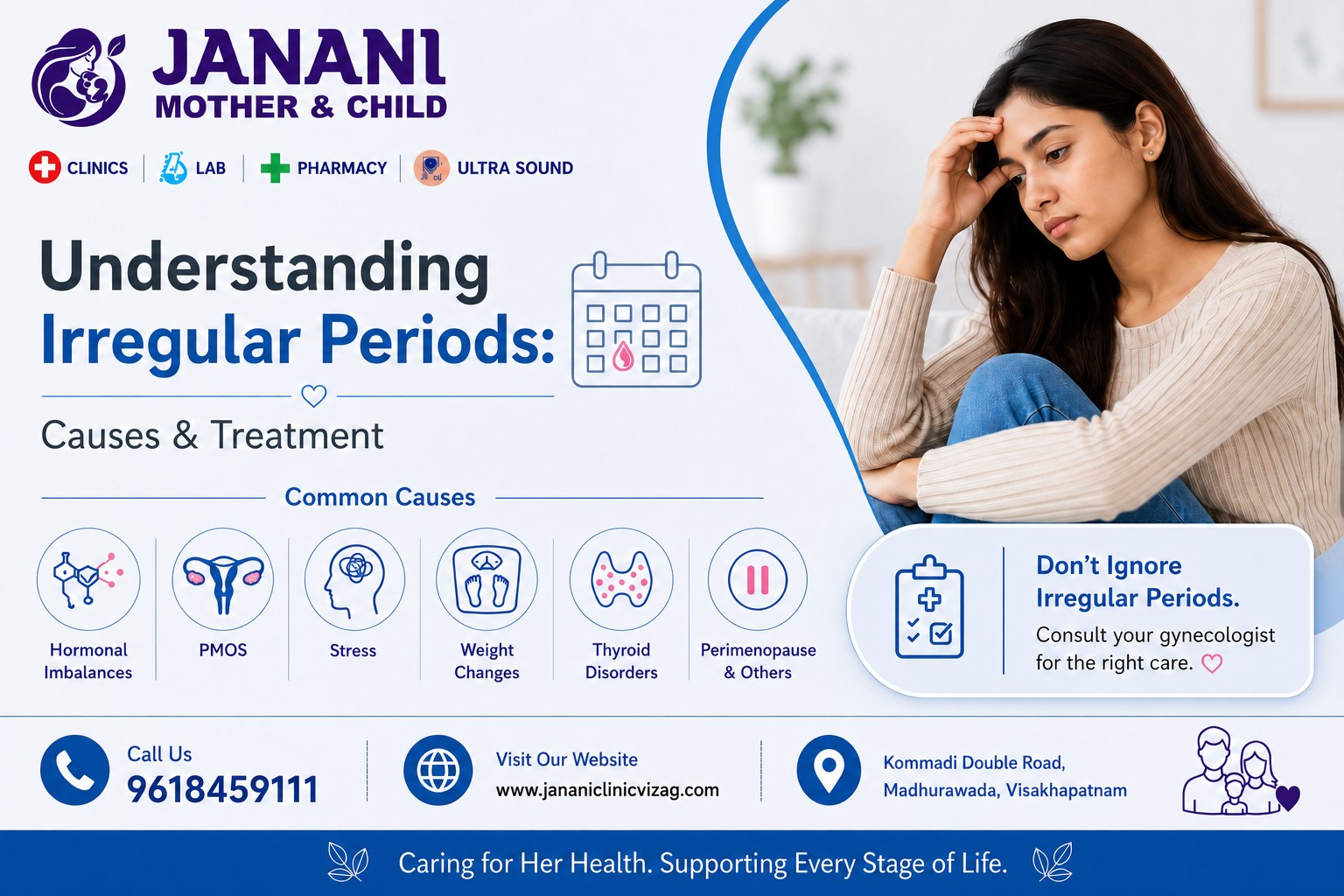
A regular menstrual cycle is an important indicator of a woman’s overall reproductive health. While it’s normal for the cycle length to vary slightly from month to month, frequent changes, missed periods, or unusually heavy or light bleeding may indicate an underlying health issue.
Irregular periods are common among women of all ages and can occur due to hormonal changes, lifestyle factors, or certain medical conditions. Understanding the possible causes and seeking timely medical advice can help ensure appropriate treatment and peace of mind.
At Janani Mother & Child Hospital, our experienced gynecologists are committed to helping women maintain optimal reproductive health through expert diagnosis and personalized care.
What Are Irregular Periods?
A normal menstrual cycle usually occurs every 21 to 35 days, with bleeding lasting about 2 to 7 days.
Your periods may be considered irregular if you experience:
▸ Periods that come too early or too late
▸ Missed periods without pregnancy
▸ Very heavy or very light bleeding
▸ Bleeding between periods
▸ Menstrual cycles that vary significantly each month
Occasional changes may be normal, but persistent irregularity should be evaluated by a doctor.
Common Causes of Irregular Periods
1. Hormonal Imbalances
Hormones control the menstrual cycle. Any imbalance can affect ovulation and cause irregular bleeding.
2. Polyendocrine Metabolic Ovarian Syndrome (PMOS)
PMOS is one of the most common causes of irregular periods in women. It may also cause:
▸ Weight gain
▸ Acne
▸ Excess facial hair
▸ Difficulty conceiving
3. Stress
Physical or emotional stress can temporarily affect hormone levels and delay or disrupt your menstrual cycle.
4. Sudden Weight Changes
Rapid weight loss, obesity, or excessive exercise can interfere with normal hormone production and ovulation.
5. Thyroid Disorders
Both an underactive and overactive thyroid gland can affect menstrual cycles and overall hormonal balance.
6. Pregnancy
A missed period is often one of the earliest signs of pregnancy. If your period is delayed, consider taking a pregnancy test and consulting your doctor.
7. Perimenopause
Women approaching menopause may experience irregular periods as hormone levels naturally fluctuate.
Symptoms That Should Not Be Ignored
Consult a gynecologist if you experience:
▸ Heavy bleeding requiring frequent pad changes
▸ Bleeding lasting longer than seven days
▸ Severe menstrual pain
▸ Bleeding between periods
▸ Missed periods for several months
▸ Dizziness or extreme fatigue during menstruation
Early evaluation can help identify and treat underlying conditions before complications develop.
How Are Irregular Periods Diagnosed?
Your gynecologist may recommend:
▸ A detailed medical history
▸ Physical and pelvic examination
▸ Blood tests to check hormone levels
▸ Thyroid function tests
▸ Ultrasound scan of the uterus and ovaries
▸ Pregnancy test, if needed
These investigations help determine the underlying cause and guide treatment.
Treatment Options
Treatment depends on the cause of the irregular periods and may include:
▸ Lifestyle Changes
▸ Maintaining a healthy weight
▸ Eating a balanced diet
▸ Regular exercise
▸ Managing stress
▸ Getting adequate sleep
▸ Medications
Your doctor may prescribe medications to:
▸ Regulate menstrual cycles
▸ Correct hormonal imbalances
▸ Treat thyroid disorders
▸ Manage PMOS symptoms
▸ Reduce heavy menstrual bleeding
Always take medications only under medical supervision.
Treating Underlying Conditions
Managing conditions such as PMOS, thyroid disorders, or other hormonal problems often restores normal menstrual cycles.
Can Irregular Periods Affect Fertility?
In some women, irregular periods may indicate irregular ovulation, which can make it more difficult to conceive.
The good news is that many causes of irregular periods are treatable. Early diagnosis and appropriate medical care can improve reproductive health and fertility outcomes.
Tips for Maintaining Menstrual Health
▸ Track your menstrual cycle using a calendar or mobile app.
▸ Eat a nutritious, balanced diet.
▸ Stay physically active.
▸ Manage stress through relaxation techniques.
▸ Maintain a healthy body weight.
▸ Schedule regular gynecological check-ups.
▸ Don’t ignore persistent menstrual changes.
Irregular periods are common, but they should never be ignored if they occur frequently or are accompanied by heavy bleeding, severe pain, or other concerning symptoms. Identifying the underlying cause early allows for effective treatment and helps protect your reproductive health.
At Janani Mother & Child Hospital, Dr. Chelamkuri Mrudula and our dedicated gynecology team offers comprehensive evaluation, diagnosis, and personalized treatment for menstrual disorders. If you’re experiencing irregular periods, don’t wait—schedule a consultation and take the first step toward better health.
Your menstrual health is an important part of your overall well-being, and we’re here to support you every step of the way.
