


- admin
- June 12, 2026
- No Comments
Blog Details
Signs Your Child May Need Pediatric Attention
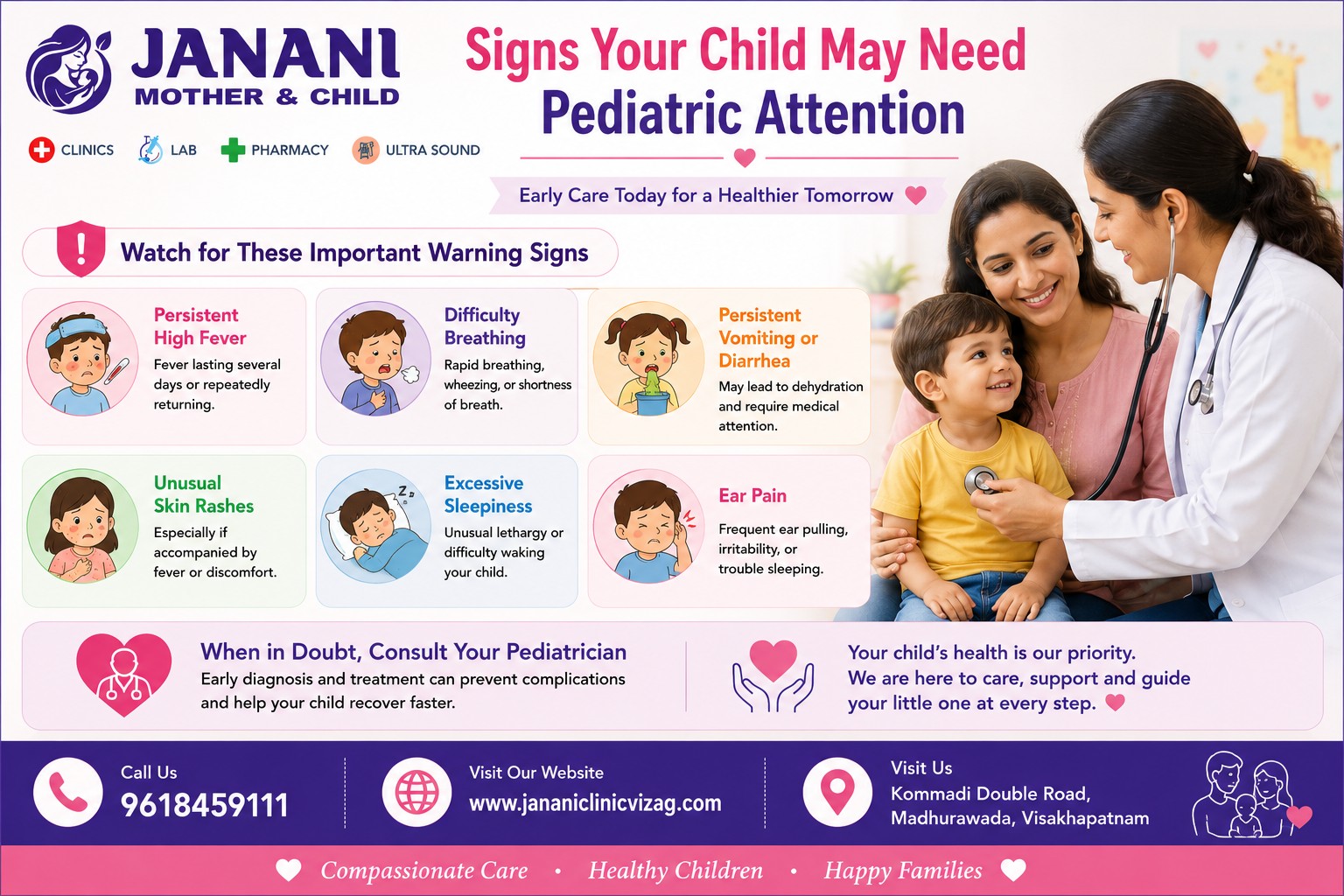
Children often experience minor illnesses such as colds, coughs, and occasional fevers as they grow. In many cases, these conditions improve with rest, hydration, and proper care. However, some symptoms may indicate a more serious health concern and should not be ignored.
Knowing when to seek pediatric care can help ensure your child receives timely treatment and prevent potential complications.
At Janani Mother & Child, we are committed to supporting parents with expert pediatric care and guidance to keep children healthy and thriving.
Why Early Medical Attention Matters
Children may not always be able to clearly communicate how they feel. Recognizing warning signs early allows healthcare providers to diagnose and treat conditions before they become more serious.
Prompt medical care can:
▸ Prevent complications
▸ Speed recovery
▸ Reduce discomfort
▸ Provide peace of mind for parents
1. Persistent High Fever
Fever is the body’s natural response to infection, but a high or prolonged fever may require medical evaluation.
Consult a Pediatrician If:
▸ Fever lasts more than a few days
▸ Fever repeatedly returns
▸ Your child appears unusually weak or lethargic
▸ The fever is accompanied by other concerning symptoms
Young infants with fever should always be evaluated promptly.
2. Difficulty Breathing
Breathing problems should never be ignored.
Warning Signs Include:
▸ Rapid breathing
▸ Wheezing
▸ Persistent coughing
▸ Chest retractions (skin pulling inward while breathing)
▸ Shortness of breath
Seek immediate medical attention if your child is struggling to breathe.
3. Persistent Vomiting or Diarrhea
Occasional vomiting or diarrhea can occur with common infections.
However, repeated episodes may lead to dehydration.
Watch For:
▸ Dry mouth
▸ Reduced urination
▸ Sunken eyes
▸ Extreme tiredness
▸ Inability to keep fluids down
Prompt treatment helps prevent dehydration and related complications.
4. Poor Feeding or Loss of Appetite
A temporary decrease in appetite can be normal during illness.
However, consult a doctor if your child:
▸ Refuses feeds repeatedly
▸ Eats significantly less than usual
▸ Appears weak or lethargic
▸ Shows signs of dehydration
This is especially important for infants and young children.
5. Persistent Cough
A cough that does not improve or worsens over time may require medical evaluation.
Seek Medical Advice If:
▸ The cough lasts more than two weeks
▸ It interferes with sleep
▸ It causes breathing difficulties
▸ It is accompanied by fever
6. Unusual Skin Rashes
Many childhood illnesses can cause skin rashes.
While some are harmless, others may require medical treatment.
Consult a Pediatrician If:
▸ The rash spreads rapidly
▸ The rash is painful
▸ The child has fever along with the rash
▸ The rash does not improve
7. Ear Pain or Frequent Ear Pulling
Ear infections are common in children.
Signs may include:
▸ Ear pain
▸ Frequent ear pulling
▸ Irritability
▸ Difficulty sleeping
▸ Fever
Early treatment can help prevent complications and discomfort.
8. Excessive Sleepiness or Lethargy
Children usually remain active and responsive even when mildly ill.
Seek medical attention if your child:
▸ Is difficult to wake
▸ Appears unusually sleepy
▸ Is less responsive than normal
▸ Shows little interest in activities
9. Delayed Growth or Development
Every child develops at their own pace, but significant delays should be assessed.
Areas of concern may include:
▸ Speech development
▸ Walking and motor skills
▸ Social interaction
▸ Growth and weight gain
Regular pediatric check-ups help monitor developmental milestones.
10. Frequent Infections
Repeated infections may sometimes indicate an underlying health issue.
Consult your pediatrician if your child experiences:
▸ Frequent ear infections
▸ Recurrent chest infections
▸ Repeated throat infections
▸ Frequent hospital visits due to illness
Early evaluation can help identify contributing factors.
Trust Your Parental Instincts
Parents know their children best.
If something seems unusual or your child is not behaving normally, it is always better to seek medical advice.
Even when symptoms appear minor, professional guidance can provide reassurance and ensure your child receives appropriate care.
The Importance of Regular Pediatric Check-Ups
Routine pediatric visits help:
Preventive care plays an important role in keeping children healthy.
Keeping Your Child Healthy and Happy
Most childhood illnesses are manageable when recognized and treated early. Understanding the warning signs and seeking timely pediatric care can make a significant difference in your child’s health and well-being.
At Janani Mother & Child, our experienced pediatric team provides compassionate care, expert diagnosis, and personalized treatment for children of all ages.
If you have concerns about your child’s health, don’t hesitate to schedule a consultation. Early care today helps build a healthier tomorrow.
