


- admin
- August 26, 2026
- No Comments
Blog Details
Laparoscopy vs. Open Surgery: Which Is Right for You?
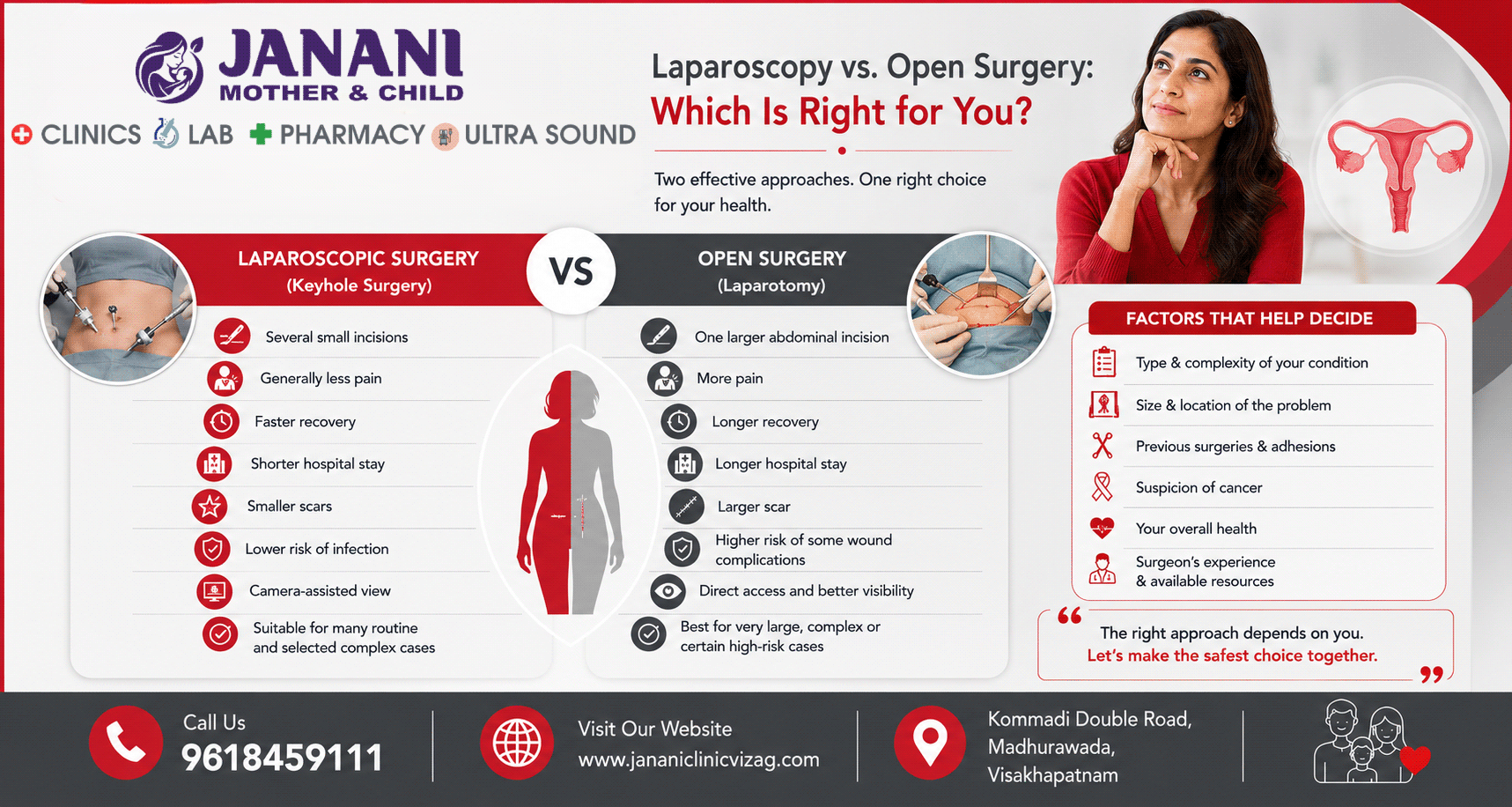
When surgery is recommended for a gynecological condition, one of the most important questions you may have is: Should I have laparoscopic surgery or open surgery?
Both approaches can be effective, but they are performed differently and may be suitable for different situations. Laparoscopy is not automatically better for every patient, and open surgery is not an outdated option. The right approach depends on your condition, the complexity of the surgery, your overall health, and other individual factors.
Let’s see the differences between laparoscopy (keyhole surgery) and open surgery (laparotomy) and the factors that help determine which option may be right for you.
What Is Laparoscopic Surgery?
Laparoscopic surgery, often called keyhole or minimally invasive surgery, is performed through several small incisions in the abdomen.
A thin instrument called a laparoscope, fitted with a camera and light, is inserted through one of the incisions. The surgeon views the internal organs on a screen and uses specialized instruments inserted through other small incisions to perform the procedure.
Laparoscopy can be used to diagnose and treat a range of gynecological conditions, including:
▸ Endometriosis
▸ Ovarian cysts
▸ Ectopic pregnancy
▸ Pelvic adhesions
▸ Certain fibroids
▸ Some cases of pelvic organ prolapse
▸ Certain hysterectomies and other gynecological procedures
What Is Open Surgery?
Open surgery, also called a laparotomy, involves making a larger incision in the abdomen to allow the surgeon direct access to the pelvic or abdominal organs.
The incision may be horizontal or vertical, depending on the type of procedure and the medical condition being treated.
Although open surgery usually involves a longer recovery than minimally invasive surgery, it remains an important option in certain situations. A larger incision can provide the surgeon with greater access and may be necessary for particularly complex procedures, very large masses, extensive disease, or when cancer is suspected.
Laparoscopy vs. Open Surgery: What Are the Main Differences?
| Feature | Laparoscopic Surgery | Open Surgery |
|---|---|---|
| Incisions | Several small incisions | One larger abdominal incision |
| Pain after surgery | Generally less | Often greater |
| Recovery | Usually faster | Usually longer |
| Hospital stay | Often shorter | May be longer |
| Scarring | Smaller scars | Larger scar |
| Visibility and access | Camera-assisted view | Direct access through larger incision |
| Suitability | Many routine and selected complex procedures | Very large, complex or certain high-risk cases |
In general, minimally invasive surgery is associated with faster recovery, less postoperative pain and a lower risk of infection than open abdominal surgery. However, the best approach must be determined individually.
What Are the Advantages of Laparoscopy?
1. Smaller Incisions
One of the most obvious advantages of laparoscopic surgery is that it uses small incisions rather than one large abdominal incision.
Smaller wounds generally mean less tissue disruption and smaller scars.
2. Less Postoperative Pain
Patients generally experience less pain after laparoscopic surgery than after open abdominal surgery, although the amount of discomfort can vary depending on the procedure.
3. Faster Recovery
Recovery is often quicker after minimally invasive surgery. Depending on the type and complexity of the procedure, some women may return to light activities relatively soon, while more complex operations require longer recovery.
4. Shorter Hospital Stay
Many laparoscopic procedures are performed as day surgery or involve a short hospital stay, although this depends on the operation and the patient’s recovery.
5. Lower Risk of Some Wound-Related Complications
Because the incisions are smaller, laparoscopic surgery is generally associated with a lower risk of infection compared with open abdominal surgery.
What Are the Limitations and Risks of Laparoscopy?
Despite its advantages, laparoscopy is still a surgical procedure and carries risks.
Potential complications can include:
▸ Bleeding
▸ Infection
▸ Injury to the bowel, bladder, ureters or blood vessels
▸ Hernia at an incision site
▸ Complications related to anesthesia
▸ The possibility of needing to convert to open surgery during the procedure
In some cases, the surgeon may begin with laparoscopy but decide that open surgery is safer. This can happen if unexpected findings, severe disease, bleeding, infection or concern about cancer are discovered during the operation.
A conversion to open surgery is not necessarily a complication or a failure. Sometimes it is the safest decision for the patient.
What Are the Advantages of Open Surgery?
Open surgery remains the best choice in certain situations.
Better Access for Complex Procedures
A larger incision can provide the surgeon with direct access to the organs and may be necessary when the anatomy is significantly altered or the procedure is particularly complex.
For example, open surgery may be considered when there are extensive adhesions, a very large uterus or pelvic mass, or when a procedure requires greater access than can safely be achieved laparoscopically.
May Be Necessary When Cancer Is Suspected
When there is significant concern that a mass may be cancerous, open surgery may be recommended to allow appropriate removal and staging. The exact approach depends on the suspected condition and the surgical expertise required.
Important in Some Emergency Situations
Open surgery may be needed when rapid access is required, such as in certain cases involving severe internal bleeding.
What Are the Disadvantages of Open Surgery?
Compared with minimally invasive surgery, open abdominal surgery generally involves:
▸ A larger incision
▸ More postoperative pain
▸ A longer hospital stay
▸ A longer recovery period
▸ A larger scar
▸ A higher risk of some wound-related complications
However, these disadvantages must be balanced against the potential benefits when open surgery is medically necessary or safer for a particular patient.
Which Conditions Can Often Be Treated With Laparoscopy?
Many gynecological conditions can potentially be managed through laparoscopic techniques, depending on their severity and complexity.
Endometriosis
Laparoscopy may be used to diagnose and treat endometriosis, including the removal or treatment of visible endometriosis tissue and adhesions.
Ovarian Cysts
Many ovarian cysts that require surgery and appear suitable for minimally invasive treatment can be removed through laparoscopy. However, very large cysts or cysts with features concerning for cancer may require open surgery.
Fibroids
Some fibroids can be removed laparoscopically, particularly when their size, location and number make minimally invasive surgery appropriate.
Ectopic Pregnancy
Laparoscopic surgery is often used when surgical treatment is required for an ectopic pregnancy, although open surgery may be necessary in certain emergency situations, such as suspected severe internal bleeding.
Hysterectomy
Depending on the reason for surgery and the patient’s anatomy and medical history, a hysterectomy may sometimes be performed using a minimally invasive approach. For benign disease, minimally invasive approaches are preferred whenever feasible, but open abdominal hysterectomy remains appropriate for some patients.
How Do Doctors Decide Which Approach Is Right?
There is no single rule that applies to every patient. Your gynecologist will consider several factors.
The Type and Complexity of Your Condition
A small, uncomplicated ovarian cyst may be suitable for laparoscopy, while a very large mass or extensive disease may require open surgery.
The Size and Location of the Problem
Large fibroids, cysts or masses can sometimes make minimally invasive surgery technically difficult or unsafe.
Previous Surgeries
Previous abdominal or pelvic surgery can lead to adhesions. In some cases, this may increase the complexity of laparoscopy, although previous surgery does not automatically rule it out.
Suspicion of Cancer
If cancer is suspected, the surgical approach may need to provide appropriate access for safe removal and staging.
Your Overall Health
Factors such as heart or lung conditions, obesity, previous medical problems and anesthesia risks may influence the decision.
The Surgeon’s Experience
Minimally invasive surgery requires specialized training and experience. The appropriate surgical approach should also take into account the surgeon’s expertise and the resources available for the procedure.
Laparoscopy and open surgery are both valuable surgical approaches. The right choice depends on your individual condition—not simply on which procedure has the smaller incision.
When it is safe and appropriate, laparoscopic surgery can offer important advantages, including smaller incisions, less postoperative pain, faster recovery and shorter hospital stays. However, open surgery may be the safer or more effective option for very large masses, extensive disease, suspected cancer, severe bleeding or other complex situations.
The most important question is not “Which surgery is better?” but rather “Which surgical approach is safest and most appropriate for my condition?”
At Janani Mother & Child, Dr. Chelamkuri Mrudula provides personalized gynecological care and evaluates each patient’s condition carefully before recommending an appropriate treatment approach. With expertise in minimally invasive gynecological procedures and a patient-focused approach, Dr. Chelamkuri Mrudula helps women understand their surgical options, potential benefits and recovery expectations so they can make informed decisions about their health.
