


- admin
- August 31, 2026
- No Comments
Blog Details
How to Reduce Your Risk of Cervical Cancer
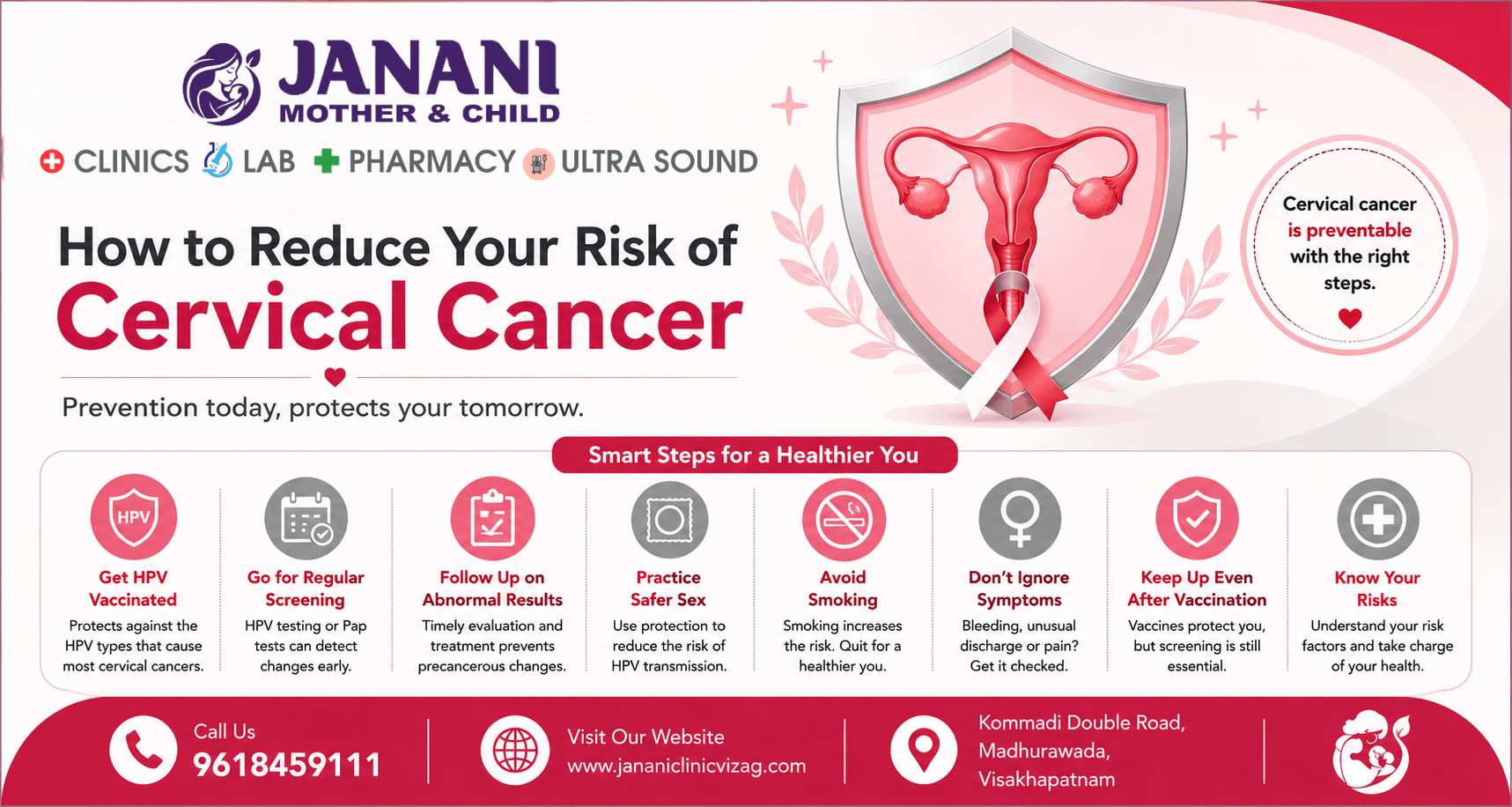
Cervical cancer is one of the few cancers for which effective prevention strategies are available. Most cervical cancers are linked to persistent infection with high-risk types of human papillomavirus (HPV), a very common infection that is usually cleared naturally by the immune system.
The good news is that vaccination, regular screening, and timely follow-up of abnormal results can significantly reduce the risk of developing cervical cancer.
Here are some important steps every woman should know.
1. Consider HPV Vaccination
HPV vaccination is one of the most important ways to prevent cervical cancer.
The vaccine protects against the HPV types that cause most cervical cancers. It provides the greatest benefit when given before exposure to HPV, which is why vaccination is recommended at a young age. WHO prioritizes vaccination for girls aged 9–14 years, while recommendations for older adolescents and adults depend on the individual’s age, vaccination history, and national guidelines.
It is important to remember that:
▸ HPV vaccination prevents new HPV infections.
▸ It does not treat an existing HPV infection.
▸ Vaccinated women still need appropriate cervical cancer screening.
If you or your child has not received the HPV vaccine, speak with a healthcare professional about whether vaccination is appropriate.
2. Don’t Skip Cervical Cancer Screening
Regular screening is one of the most effective ways to prevent cervical cancer.
Screening can detect HPV infection or abnormal cervical cells before they develop into cancer. Precancerous changes can often be treated, preventing them from progressing.
Depending on your age, health history, and the screening guidelines followed in your region, screening may involve:
▸ HPV testing – checks for high-risk HPV types.
▸ Pap test (Pap smear) – looks for abnormal cells on the cervix.
▸ HPV/Pap co-testing – combines the two tests in appropriate situations.
WHO’s current guidance emphasizes HPV-based screening as an important high-performance approach to cervical cancer prevention.
Your doctor can recommend the appropriate screening method and interval for you.
3. Follow Up on an Abnormal Screening Result
An abnormal Pap or HPV test does not mean you have cancer.
It may indicate an HPV infection or changes in cervical cells that need monitoring or further evaluation.
Depending on the result, your doctor may recommend repeat testing, examination of the cervix, or treatment of precancerous changes.
The important thing is not to ignore an abnormal result or miss your follow-up appointment. Detecting and treating precancerous lesions is a key part of cervical cancer prevention.
4. Practice Safer Sex
HPV is primarily transmitted through sexual contact. Using condoms can reduce the risk of HPV transmission, although condoms cannot provide complete protection because HPV can infect areas not covered by a condom.
Safer sexual practices can also reduce the risk of other sexually transmitted infections that may affect reproductive health.
5. Avoid Smoking
Smoking is another important factor to consider.
Smoking can make it harder for the body to clear HPV infection and is associated with an increased risk of cervical cancer. Avoiding smoking or quitting if you currently smoke can help reduce your risk.
If quitting is difficult, speak with your healthcare professional about evidence-based support.
6. Don’t Ignore Unusual Symptoms
Cervical cancer may not cause symptoms in its early stages, which is why screening is so important.
However, symptoms that should be evaluated by a healthcare professional can include:
▸ Bleeding after sexual intercourse
▸ Bleeding between periods
▸ Unusual or persistent vaginal discharge
▸ Pelvic pain
▸ Pain during sexual intercourse
These symptoms can have many causes and do not necessarily mean cancer, but they should not be ignored.
7. Keep Up With Screening Even After HPV Vaccination
Receiving the HPV vaccine is excellent protection, but it does not protect against every high-risk HPV type.
For this reason, women who have been vaccinated should still follow the cervical screening recommendations appropriate for their age and health history.
8. Know Your Personal Risk Factors
Certain factors can increase the likelihood of persistent HPV infection or cervical cancer, including:
▸ Persistent infection with high-risk HPV
▸ Smoking
▸ A weakened immune system
▸ Certain sexual and reproductive health factors
▸ Previous abnormal cervical screening results
Having a risk factor does not mean that you will develop cervical cancer. It simply makes appropriate prevention and screening particularly important.
Can Cervical Cancer Really Be Prevented?
In many cases, yes.
HPV vaccination can prevent infection with important cancer-causing HPV types, while screening can identify precancerous changes before they become invasive cancer. Treating those precancerous changes can prevent cervical cancer from developing.
This is why prevention involves more than just one step. Vaccination + screening + timely follow-up work together.
What If You Have Already Been Exposed to HPV?
Don’t panic.
HPV is extremely common, and most HPV infections are controlled naturally by the immune system. A positive HPV test does not mean that you have cancer, nor does it tell you when the infection was acquired.
If you receive a positive HPV result, follow your healthcare professional’s recommendations for repeat testing or further evaluation.
When Should You Talk to Your Gynecologist?
Consider discussing cervical cancer prevention with your gynecologist if:
▸ You have never had cervical cancer screening.
▸ You are unsure when your next screening is due.
▸ You have not received the HPV vaccine.
▸ You have had an abnormal Pap or HPV test.
▸ You have persistent or unusual vaginal bleeding or discharge.
▸ You have a weakened immune system.
▸ You smoke and would like help quitting.
▸ You have questions about your individual cervical cancer risk.
Your doctor can recommend a prevention and screening plan based on your age, medical history, previous screening results, vaccination status, and individual risk factors.
Cervical cancer is highly preventable when the right preventive measures are used.
Getting vaccinated against HPV when appropriate, attending regular cervical cancer screening, following up on abnormal results, avoiding smoking, and practicing safer sex can all help reduce your risk.
Most importantly, don’t wait for symptoms before taking care of your cervical health. Screening is designed to identify problems before they become cancer.
At Janani Mother & Child, Dr. Chelamkuri Mrudula provides compassionate, personalized gynecological care, including preventive women’s health and cervical cancer screening guidance. Through regular check-ups, appropriate screening, and timely evaluation of concerns, Dr. Chelamkuri Mrudula helps women take proactive steps toward protecting their long-term health.
