


- admin
- June 1, 2026
- No Comments
Blog Details
Fibroids in Women: Symptoms You Should Know
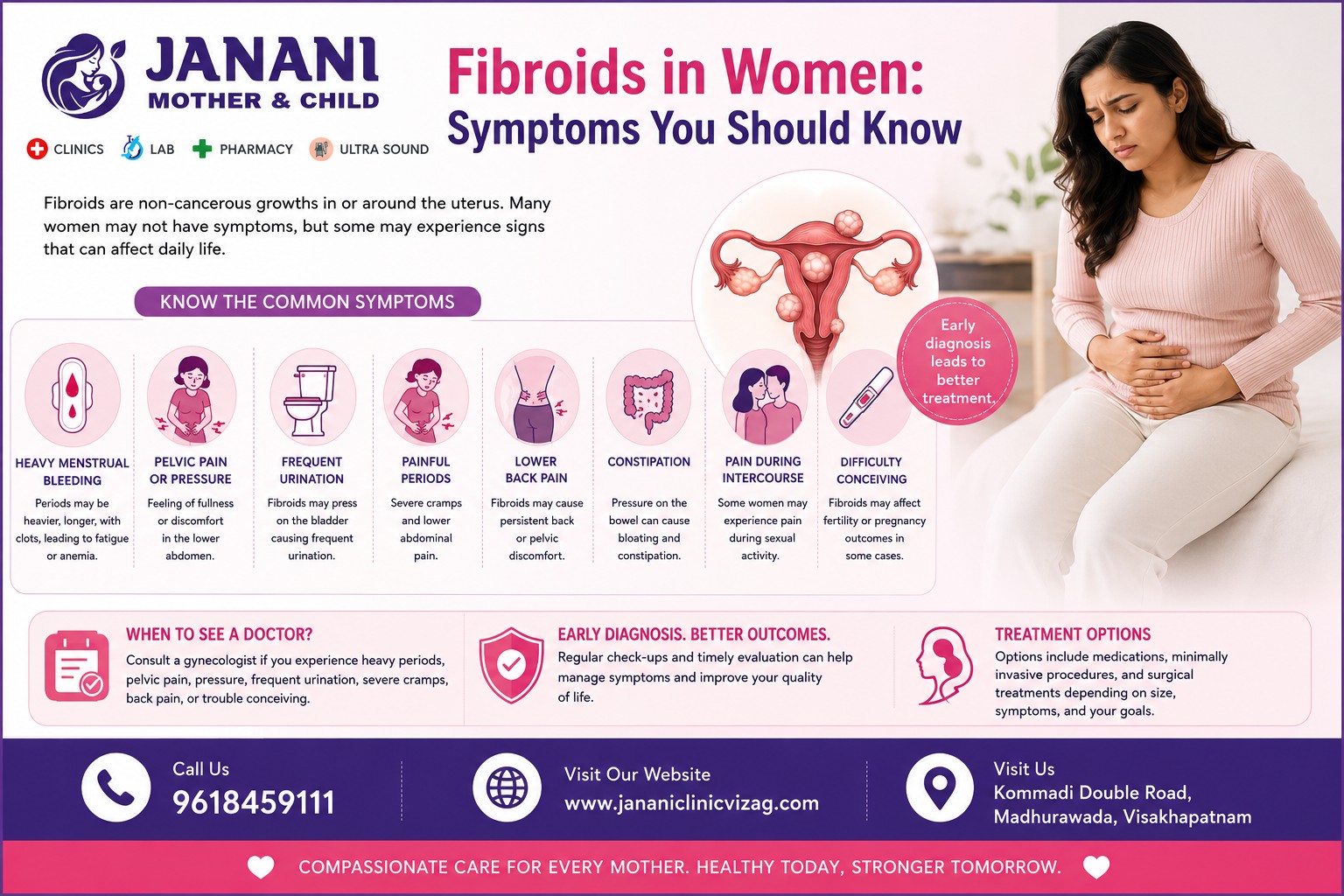
Uterine fibroids are one of the most common gynecological conditions affecting women, particularly during their reproductive years. While many fibroids are harmless and may not cause symptoms, others can significantly impact a woman’s health, comfort, and quality of life. Understanding the symptoms of fibroids can help women seek timely medical care and prevent complications.
At Janani Mother & Child, we are committed to helping women recognize, diagnose, and manage gynecological conditions through compassionate and expert care.
What Are Fibroids?
Fibroids, also known as uterine fibroids or leiomyomas, are non-cancerous growths that develop in or around the uterus.
Fibroids can vary greatly in size:
▸ As small as a seed
▸ As large as a grapefruit
▸ Single or multiple growths
Although fibroids are usually benign, they can sometimes cause troublesome symptoms that require medical attention.
What Causes Fibroids?
The exact cause of fibroids is not fully understood, but several factors may increase the risk:
▸ Hormonal changes (estrogen and progesterone)
▸ Family history of fibroids
▸ Obesity
▸ Early onset of menstruation
▸ Age during reproductive years
Many women with fibroids have no symptoms and may only discover them during a routine gynecological examination.
Common Symptoms of Fibroids
1. Heavy Menstrual Bleeding
One of the most common signs of fibroids is unusually heavy menstrual bleeding.
You May Notice:
▸ Periods lasting longer than usual
▸ Passing large blood clots
▸ Frequently changing sanitary pads
▸ Feeling tired due to blood loss
Heavy bleeding can sometimes lead to anemia.
2. Pelvic Pain or Pressure
As fibroids grow, they may create pressure in the pelvic region.
Symptoms May Include:
▸ Persistent pelvic discomfort
▸ Feeling of fullness in the lower abdomen
▸ Pressure around the bladder or rectum
The severity often depends on the size and location of the fibroids.
3. Frequent Urination
Large fibroids may press against the bladder.
This can cause:
▸ Frequent urination
▸ Difficulty emptying the bladder completely
▸ Increased urge to urinate
Women often mistake this symptom for a urinary tract problem.
4. Painful Periods
Many women with fibroids experience increased menstrual pain.
Common Complaints:
▸ Severe cramping
▸ Lower abdominal pain
▸ Back pain during periods
If menstrual pain interferes with daily activities, it should be evaluated by a doctor.
5. Lower Back Pain
Fibroids located toward the back of the uterus may press on surrounding structures.
This can lead to:
▸ Persistent lower back pain
▸ Pelvic discomfort
▸ Pain radiating down the legs in some cases
6. Constipation
Large fibroids may put pressure on the bowel.
Symptoms can include:
▸ Difficulty passing stools
▸ Bloating
▸ Abdominal discomfort
7. Pain During Intercourse
Some women may experience discomfort or pain during sexual intercourse due to fibroid location and size.
This symptom should not be ignored and should be discussed with a gynecologist.
8. Difficulty Conceiving
Although many women with fibroids have healthy pregnancies, certain fibroids may affect fertility or pregnancy outcomes.
Fibroids can sometimes:
▸ Interfere with implantation
▸ Increase miscarriage risk
▸ Affect pregnancy and delivery
Women planning a pregnancy should seek medical advice if fibroids are diagnosed.
When Should You See a Doctor?
Consult your gynecologist if you experience:
▸ Heavy or prolonged periods
▸ Pelvic pain or pressure
▸ Frequent urination
▸ Severe menstrual cramps
▸ Persistent lower back pain
▸ Difficulty becoming pregnant
▸ Unexplained fatigue due to blood loss
Early diagnosis allows more treatment options and better outcomes.
How Are Fibroids Diagnosed?
Your doctor may recommend:
▸ Pelvic examination
▸ Ultrasound scan
▸ MRI in certain cases
▸ Additional tests if needed
Regular gynecological check-ups help detect fibroids before they become problematic.
Treatment Options for Fibroids
Treatment depends on:
▸ Size of the fibroids
▸ Symptoms
▸ Age
▸ Future pregnancy plans
Options may include:
▸ Monitoring and observation
▸ Medications
▸ Minimally invasive procedures
▸ Surgical treatment when necessary
Your doctor will recommend the most appropriate treatment for your individual situation.
Prioritize Your Gynecological Health
Fibroids are common, but they should not be ignored when symptoms affect your daily life. Early diagnosis and proper treatment can help relieve symptoms and improve overall well-being.
At Janani Mother & Child, Dr. Mrudula Chelamkuri and her experienced team provide comprehensive women’s healthcare, advanced diagnostics, and personalized treatment plans to support women at every stage of life.
If you are experiencing symptoms of fibroids, schedule a consultation and take the first step toward better health.
