


- admin
- August 3, 2026
- No Comments
Blog Details
Essential Women's Health Screenings by Age
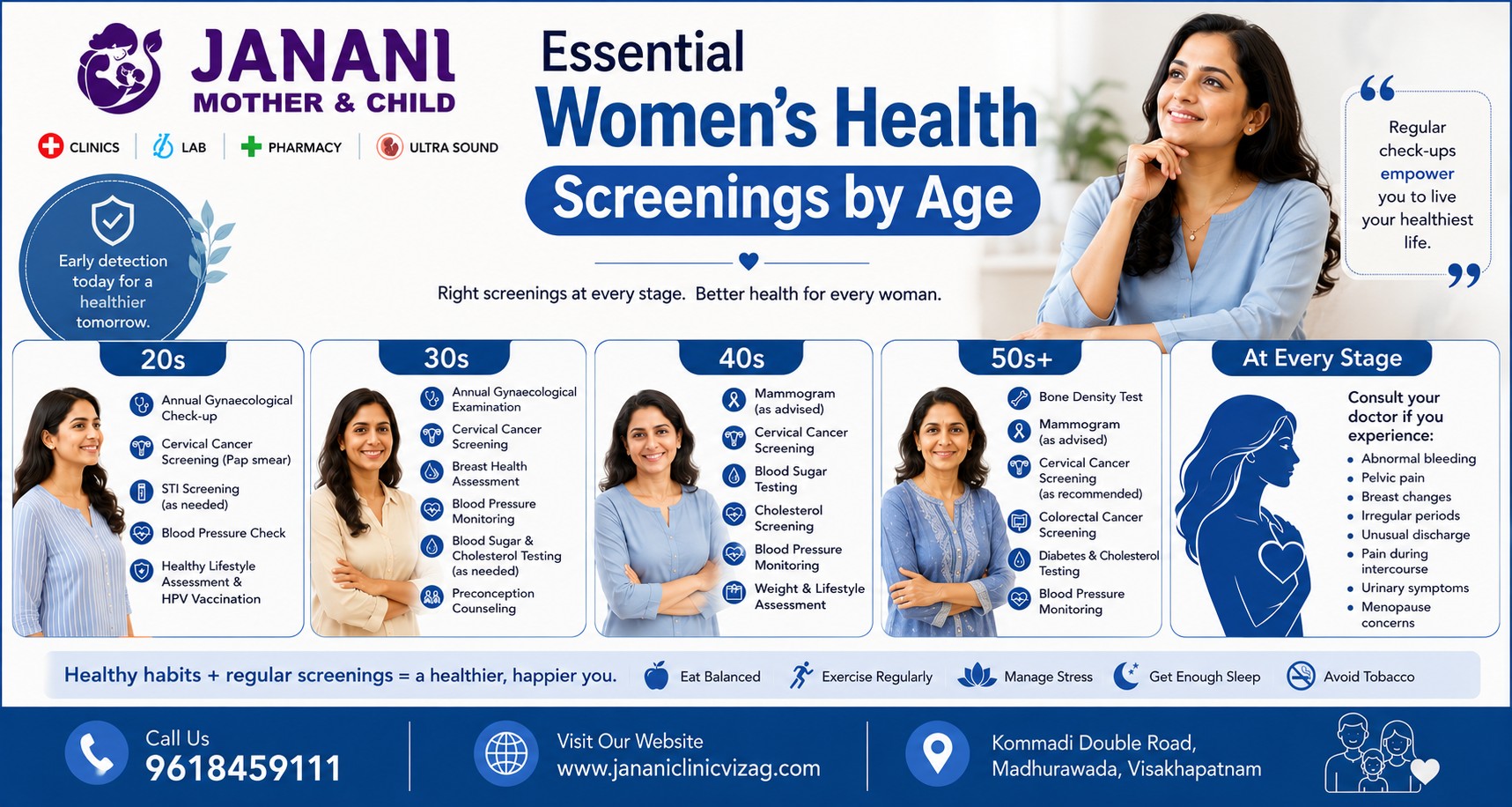
Taking care of your health isn’t just about treating illness—it’s about preventing problems before they become serious. Regular health screenings play a vital role in detecting diseases early, monitoring your overall well-being, and ensuring you receive the right care at the right time.
Every stage of a woman’s life brings different health needs. Understanding which screenings are recommended for your age can help you stay healthy and confident for years to come.
Why Are Regular Health Screenings Important?
Many health conditions develop silently without causing noticeable symptoms. Routine screenings allow doctors to detect problems early, when treatment is often simpler and more effective.
Regular women’s health screenings can help:
▸ Detect cervical cancer in its early stages.
▸ Identify breast abnormalities.
▸ Monitor reproductive health.
▸ Screen for diabetes, high blood pressure, and cholesterol.
▸ Assess bone health after menopause.
▸ Promote lifelong wellness through preventive care.
Health Screenings in Your 20s
Your twenties are the ideal time to establish healthy habits and begin routine preventive care.
Recommended screenings may include:
Annual Gynecological Check-Up
A yearly visit allows your gynecologist to discuss menstrual health, contraception, sexual health, and any concerns you may have.
Cervical Cancer Screening
Your doctor will advise when to begin Pap smear screening based on your age, medical history, and current screening guidelines.
STI Screening
Sexually transmitted infection (STI) testing may be recommended based on your individual risk factors.
Blood Pressure Check
High blood pressure often has no symptoms, making regular monitoring important.
Healthy Lifestyle Assessment
Your doctor may also discuss:
▸ Nutrition
▸ Exercise
▸ Weight management
▸ Mental well-being
▸ Vaccinations, including the HPV vaccine if appropriate
Health Screenings in Your 30s
Your thirties often involve balancing work, family, and personal health. Preventive care remains essential.
Recommended screenings include:
▸ Annual gynecological examination
▸ Cervical cancer screening as recommended
▸ Breast health assessment and clinical breast examination
▸ Blood pressure monitoring
▸ Blood sugar testing if you have risk factors
▸ Cholesterol testing based on age and family history
▸ Preconception counseling if planning a pregnancy
Health Screenings in Your 40s
As you enter your forties, screening becomes even more important because the risk of certain conditions begins to increase.
Recommended screenings may include:
Mammogram
Your doctor will recommend when to begin regular mammography based on your age, family history, and individual risk.
Cervical Cancer Screening
Continue regular screening according to your doctor’s recommendations.
Blood Sugar Testing
Screening helps detect prediabetes and diabetes early.
Cholesterol Screening
Monitoring cholesterol supports heart health and helps reduce cardiovascular risk.
Blood Pressure Monitoring
Continue regular checks even if you feel well.
Weight and Lifestyle Assessment
Maintaining a healthy weight can reduce the risk of many chronic diseases.
Health Screenings in Your 50s and Beyond
After menopause, maintaining regular health screenings becomes increasingly important.
Bone Density Test
Falling estrogen levels increase the risk of osteoporosis. Bone density testing helps identify reduced bone strength before fractures occur.
Mammograms
Continue regular breast cancer screening as advised by your doctor.
Cervical Cancer Screening
Depending on your age, previous screening results, and medical history, your doctor will recommend whether continued screening is needed.
Colorectal Cancer Screening
Screening may begin around age 45–50, depending on your individual risk and current recommendations.
Diabetes and Cholesterol Testing
Regular monitoring supports long-term heart and metabolic health.
Blood Pressure Monitoring
Routine blood pressure checks remain an essential part of preventive care.
Screenings Throughout Every Stage of Life
Regardless of age, every woman should pay attention to changes in her body and seek medical advice if she experiences:
▸ Abnormal vaginal bleeding
▸ Persistent pelvic pain
▸ Breast lumps or nipple changes
▸ Irregular menstrual cycles
▸ Unusual vaginal discharge
▸ Pain during intercourse
▸ Urinary symptoms
▸ Menopause-related concerns
Never ignore symptoms simply because they seem minor.
Healthy Habits That Complement Regular Screenings
Screenings are only one part of maintaining good health. You can further reduce your risk of disease by:
▸ Eating a balanced, nutritious diet
▸ Exercising regularly
▸ Maintaining a healthy weight
▸ Avoiding tobacco products
▸ Limiting alcohol consumption
▸ Managing stress
▸ Getting adequate sleep
▸ Following your doctor’s recommendations for vaccinations and routine health checks
Preventive health screenings are one of the most effective ways to protect your long-term health. By scheduling regular check-ups and age-appropriate screenings, you can detect health concerns early, receive timely treatment, and make informed decisions about your well-being.
Remember, the best healthcare is proactive healthcare. Don’t wait for symptoms to appear—make preventive screenings a regular part of your wellness routine.
.At Janani Mother & Child, Dr. Chelamkuri Mrudula provides comprehensive women’s health care for every stage of life. From routine gynecological check-ups and cervical cancer screening to menopause care and preventive health guidance, Dr. Chelamkuri Mrudula is committed to helping women stay healthy through early detection, personalized care, and compassionate support.
