


- admin
- May 15, 2026
- No Comments
Blog Details
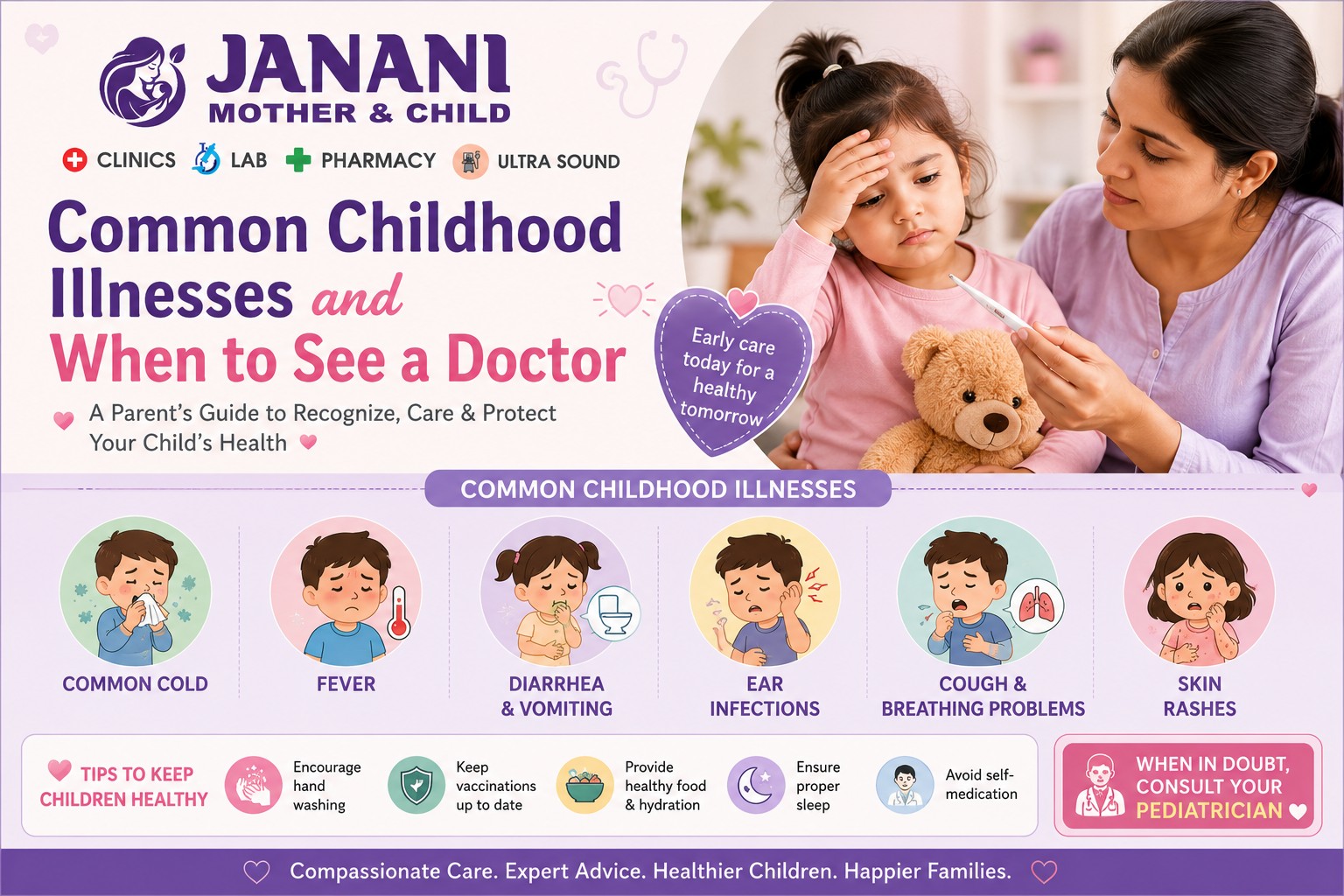
Children often fall sick as their immune systems are still developing. While many childhood illnesses are mild and improve with rest and home care, some symptoms require immediate medical attention. Knowing the difference can help parents act quickly and keep their children safe and healthy.
1. COMMON COLD
The common cold is one of the most frequent illnesses in children.
Symptoms
* Runny or blocked nose
* Sneezing
* Mild fever
* Sore throat
* Cough
Home Care
* Ensure plenty of fluids
* Encourage rest
* Use saline nasal drops if needed
* Give medications only as advised by a doctor
When to See a Doctor
* Fever lasting more than 3 days
* Difficulty breathing
* Child becomes unusually sleepy or irritable
* Poor feeding in infants
2. FEVER
Fever is usually a sign that the body is fighting an infection.
Common Causes
* Viral infections
* Ear infections
* Throat infections
* Vaccination reactions
What Parents Can Do
* Keep the child hydrated
* Dress them in light clothing
* Monitor temperature regularly
Seek Medical Help If
* Baby is below 3 months with fever
* Fever exceeds 102°F (39°C)
* Fever continues for several days
* Child has seizures, breathing problems, or persistent vomiting
3. DIARRHEA and VOMITING
These are common in children and may occur due to viral infections, food poisoning, or stomach infections.
Signs to Watch
* Frequent loose stools
* Vomiting
* Stomach pain
* Loss of appetite
Prevent Dehydration
* Give ORS (Oral Rehydration Solution)
* Encourage small sips of fluids
* Continue light meals if tolerated
Consult a Doctor If
* Blood in stool or vomit
* Child is unable to drink fluids
* Signs of dehydration appear:
(a) Dry mouth
(b) No tears while crying
(c) Reduced urination
(d) Excessive sleepiness
4. EAR INFECTIONS
Ear infections are common, especially in younger children.
Symptoms
* Ear pain
* Pulling or rubbing the ear
* Fever
* Trouble sleeping
Medical Attention Needed If
* Severe ear pain
* Fluid or pus from the ear
* Hearing difficulty
* Symptoms persist beyond 1–2 days
5. COUGH AND BREATHING PROBLEMS
Cough can occur due to colds, allergies, asthma, or infections.
Mild Symptoms
* Occasional cough
* Mild congestion
Emergency Signs
* Fast breathing
* Wheezing
* Chest pulling inward while breathing
* Lips turning bluish
Seek immediate medical care if any breathing difficulty is noticed.
6. SKIN RASHES
Children may develop rashes due to allergies, viral infections, heat, or skin irritation.
See a Doctor If
* Rash spreads rapidly
* Fever accompanies the rash
* Rash is painful or swollen
* Child appears very unwell
TIPS TO KEEP CHILDREN HEALTHY
When in Doubt, Consult Your Pediatrician
Parents know their children best. If your child’s symptoms seem severe, unusual, or persistent, it is always safer to consult a doctor early. Timely medical care can prevent complications and help your child recover faster.
At Janani Mother & Child, we are committed to providing compassionate pediatric care and guidance for every stage of your child’s growth and development.
