


- admin
- July 17, 2026
- No Comments
Blog Details
Bone Health After Menopause: Preventing Osteoporosis
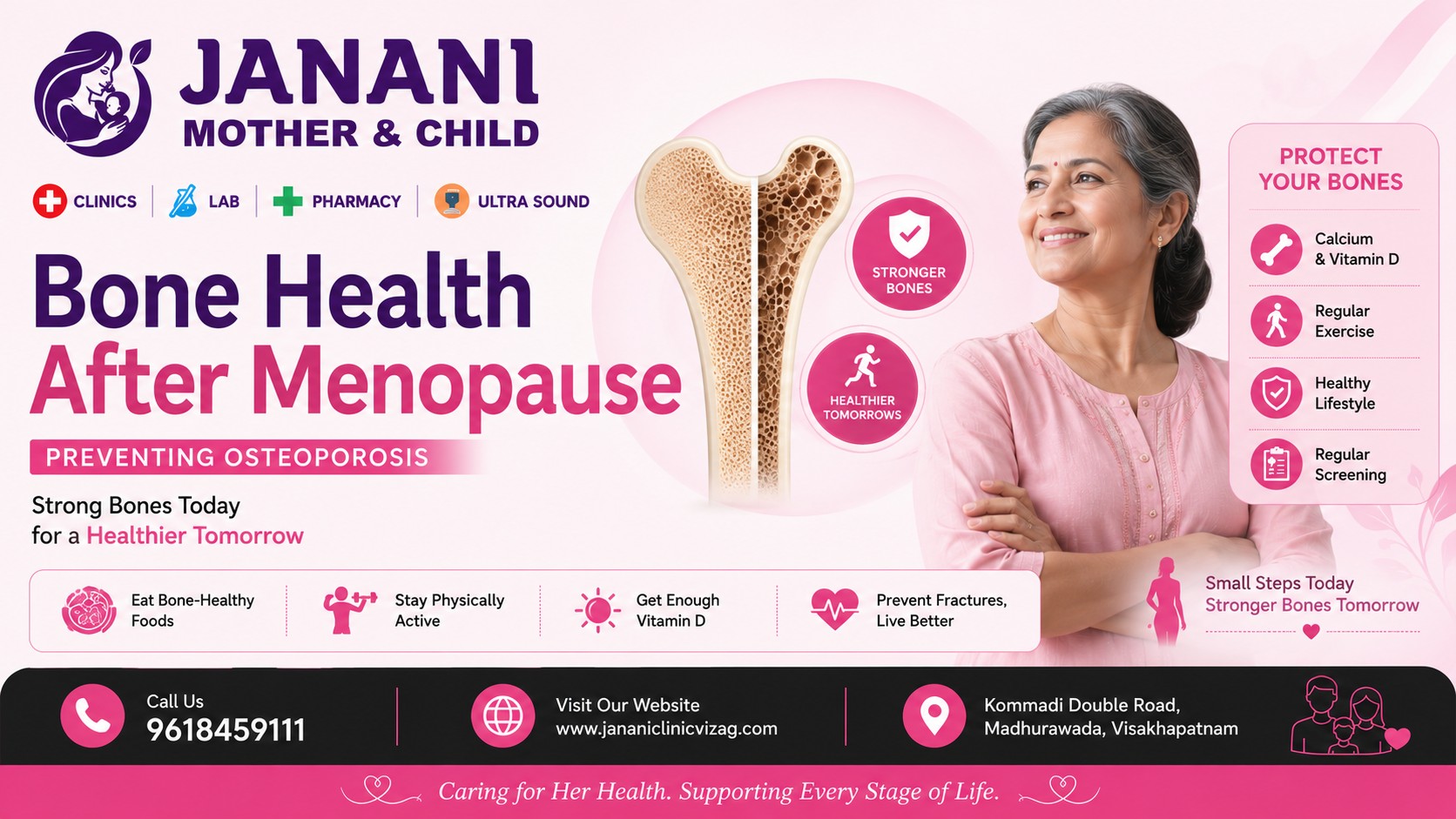
Menopause brings many changes to a woman’s body, and one of the most important—but often overlooked—is the effect it has on bone health. As estrogen levels decline after menopause, bones can become thinner and weaker, increasing the risk of osteoporosis and fractures.
The good news is that osteoporosis is often preventable. With healthy lifestyle choices, regular check-ups, and early intervention, women can maintain strong bones and continue enjoying an active, independent life.
At Janani Mother & Child Hospital, we encourage women to prioritize bone health as an essential part of healthy aging.
What is Osteoporosis?
Osteoporosis is a condition in which bones become weak, brittle, and more likely to break. It develops gradually over time and often has no symptoms until a fracture occurs.
Common fracture sites include:
▸ Hip
▸ Wrist
▸ Spine
Because osteoporosis develops silently, prevention and early screening are extremely important.
Why Does Menopause Increase the Risk?
Estrogen plays a vital role in maintaining bone strength.
After menopause:
▸ Estrogen levels drop significantly.
▸ Bone loss occurs more rapidly.
▸ Bone density decreases.
▸ The risk of fractures increases.
Women can lose a significant amount of bone density during the first few years after menopause, making this an important time to focus on bone health.
Risk Factors for Osteoporosis
You may be at higher risk if you:
▸ Are over 50 years of age
▸ Have gone through menopause
▸ Have a family history of osteoporosis
▸ Have a small or thin body frame
▸ Consume insufficient calcium or vitamin D
▸ Lead a sedentary lifestyle
▸ Smoke or consume excessive alcohol
▸ Take long-term steroid medications
▸ Have certain medical conditions affecting bone health
Warning Signs
Osteoporosis is often called the “silent disease” because it usually causes no symptoms in its early stages.
As it progresses, signs may include:
▸ Loss of height
▸ Back pain
▸ Stooped posture
▸ Bones that break easily after minor falls or injuries
If you notice these symptoms, consult your doctor promptly.
How Can You Prevent Osteoporosis?
Eat a Bone-Healthy Diet
Choose foods rich in:
▸ Calcium
▸ Vitamin D
▸ Protein
▸ Magnesium
▸ Green leafy vegetables
▸ Dairy products
▸ Nuts and seeds
Your doctor may also recommend supplements if needed.
Stay Physically Active
Regular exercise strengthens bones and muscles.
Helpful activities include:
▸ Walking
▸ Climbing stairs
▸ Strength training
▸ Yoga
▸ Light resistance exercises
Aim for at least 30 minutes of activity most days of the week.
Get Enough Vitamin D
Vitamin D helps the body absorb calcium effectively.
Sources include:
▸ Safe sunlight exposure
▸ Fortified foods
▸ Fatty fish
▸ Supplements if recommended by your doctor
Maintain a Healthy Lifestyle
Protect your bones by:
▸ Avoiding smoking
▸ Limiting alcohol intake
▸ Maintaining a healthy body weight
▸ Preventing falls at home
Small lifestyle changes can make a significant difference over time.
Bone Density Testing
Women over 65-or younger women with risk factors-may benefit from a Bone Mineral Density (DEXA) scan.
This simple, painless test measures bone strength and helps identify osteoporosis before fractures occur.
Early diagnosis allows treatment to begin before serious complications develop.
Treatment Options
If osteoporosis is diagnosed, your doctor may recommend:
▸ Calcium and Vitamin D supplements
▸ Prescription medications to strengthen bones
▸ Regular exercise
▸ Lifestyle modifications
▸ Ongoing monitoring of bone density
Treatment plans are individualized based on age, health, and fracture risk.
Strong bones are essential for maintaining independence, mobility, and quality of life after menopause. While bone loss is a natural part of aging, osteoporosis is not an inevitable consequence. Through proper nutrition, regular exercise, healthy lifestyle choices, and timely screening, women can significantly reduce their risk of fractures and stay active for years to come.
At Janani Mother & Child Hospital, we are committed to supporting women’s health through every stage of life. Whether you need guidance on menopause, bone health, or preventive care, our experienced team is here to help you build a healthier future.
