


- admin
- July 24, 2026
- No Comments
Blog Details
Safe Exercises During Pregnancy – What You Can and Cannot Do
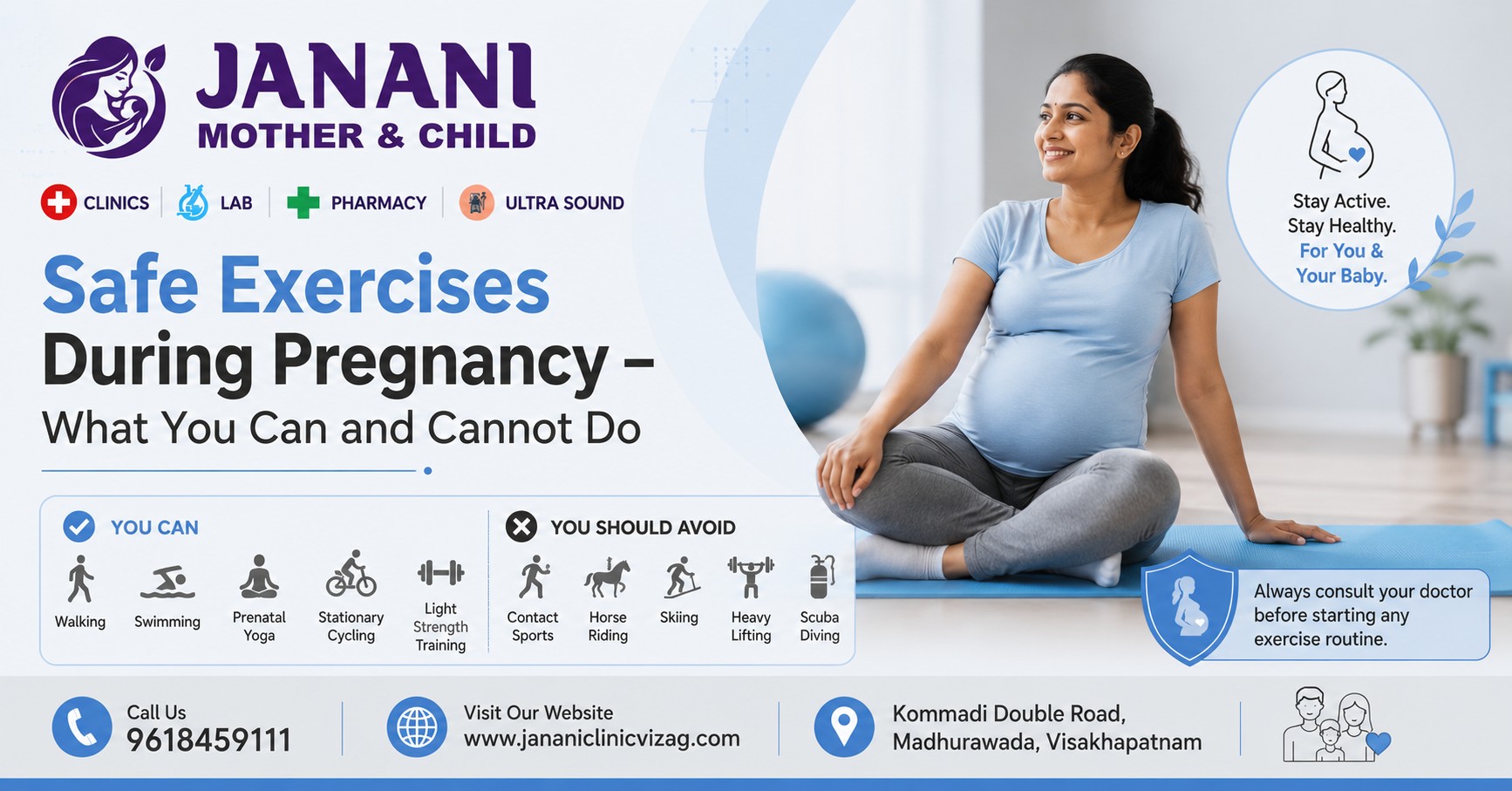
While it’s natural to wonder whether exercise is safe during pregnancy, the answer is yes-for most women with a healthy pregnancy. Staying active can improve your physical and emotional well-being, prepare your body for labor, and support a healthier pregnancy.
However, not all exercises are suitable during pregnancy. Knowing which activities are safe and which should be avoided can help you exercise with confidence while keeping both you and your baby safe.
Why Exercise During Pregnancy Matters
Regular physical activity during pregnancy offers several benefits, including:
▸ Improves blood circulation
▸ Reduces back pain and muscle aches
▸ Helps control healthy weight gain
▸ Boosts energy levels
▸ Reduces stress and anxiety
▸ Improves sleep quality
▸ Lowers the risk of gestational diabetes
▸ Builds strength and endurance for labor and delivery
▸ Supports faster recovery after childbirth
Before beginning or continuing any exercise routine, always discuss it with your obstetrician.
Safe Exercises During Pregnancy
1. Walking
Walking is one of the safest and easiest exercises throughout pregnancy. It improves cardiovascular health without placing excessive stress on your joints.
2. Swimming and Water Aerobics
Water supports your growing body, making swimming an excellent low-impact exercise. It reduces swelling, relieves back pain, and helps improve overall fitness.
3. Prenatal Yoga
Prenatal yoga improves flexibility, posture, breathing, and relaxation. It can also help reduce stress and prepare your body for labor.
Always choose classes specifically designed for pregnant women.
4. Stationary Cycling
A stationary bike provides a safe cardiovascular workout while minimizing the risk of falls associated with outdoor cycling.
5. Low-Impact Strength Training
Using light weights or resistance bands can help maintain muscle strength. Focus on proper form and avoid lifting heavy weights.
6. Pelvic Floor (Kegel) Exercises
Kegel exercises strengthen the pelvic floor muscles, helping support the uterus, bladder, and bowel. They may also aid recovery after childbirth.
Exercises to Avoid During Pregnancy
Certain activities carry higher risks and should generally be avoided.
Contact Sports
Avoid sports such as football, basketball, martial arts, or hockey, where there is a risk of collisions or abdominal injury.
Activities with a High Risk of Falling
Avoid:
▸ Horse riding
▸ Skiing
▸ Skating
▸ Gymnastics
▸ Mountain biking
These activities increase the risk of falls that could harm both mother and baby.
Heavy Weightlifting
Very heavy lifting can increase abdominal pressure and may not be appropriate during pregnancy.
Exercises Lying Flat on Your Back (After the First Trimester)
After around 20 weeks, prolonged exercises performed flat on your back may reduce blood flow due to pressure from the growing uterus.
Scuba Diving
Scuba diving is unsafe during pregnancy because changes in pressure can affect the baby’s development.
High-Temperature Exercise
Avoid exercising in extremely hot weather, hot yoga, or saunas, as overheating can be harmful during pregnancy.
Exercise Safety Tips
Follow these simple guidelines for a safe workout:
▸ Warm up before exercising.
▸ Cool down afterward.
▸ Drink plenty of water before, during, and after exercise.
▸ Wear comfortable clothing and supportive footwear.
▸ Avoid exercising until exhaustion.
▸ Eat healthy snacks if needed to maintain energy.
▸ Listen to your body and rest whenever necessary.
Warning Signs to Stop Exercising Immediately
Stop exercising and seek medical attention if you experience:
▸ Vaginal bleeding
▸ Leakage of fluid from the vagina
▸ Severe abdominal pain
▸ Regular painful contractions
▸ Chest pain
▸ Difficulty breathing before exertion
▸ Dizziness or fainting
▸ Severe headache
▸ Calf pain or swelling
▸ Decreased fetal movements after your baby has started moving regularly
When Exercise May Not Be Recommended
Your doctor may advise limiting or avoiding exercise if you have certain pregnancy complications, such as:
▸ Placenta previa after mid-pregnancy
▸ Severe anemia
▸ Cervical insufficiency
▸ Preeclampsia
▸ Significant heart or lung disease
▸ Certain high-risk pregnancies
▸ Persistent vaginal bleeding
▸ Risk of preterm labor
Always follow your healthcare provider’s advice regarding physical activity.
Exercise is one of the healthiest habits you can maintain during pregnancy. The key is choosing safe, low-impact activities and exercising within your comfort level. Every pregnancy is unique, so your exercise routine should be tailored to your individual health and stage of pregnancy.
At Janani Mother & Child, Dr. Chelamkuri Mrudula provides personalized antenatal care and expert guidance to help expectant mothers enjoy a safe, healthy, and active pregnancy. Whether you have questions about exercise, nutrition, or pregnancy care, Dr. Chelamkuri Mrudula is committed to supporting you every step of the way.
