


- admin
- July 13, 2026
- No Comments
Blog Details
HPV and Cervical Cancer: Understanding the Connection
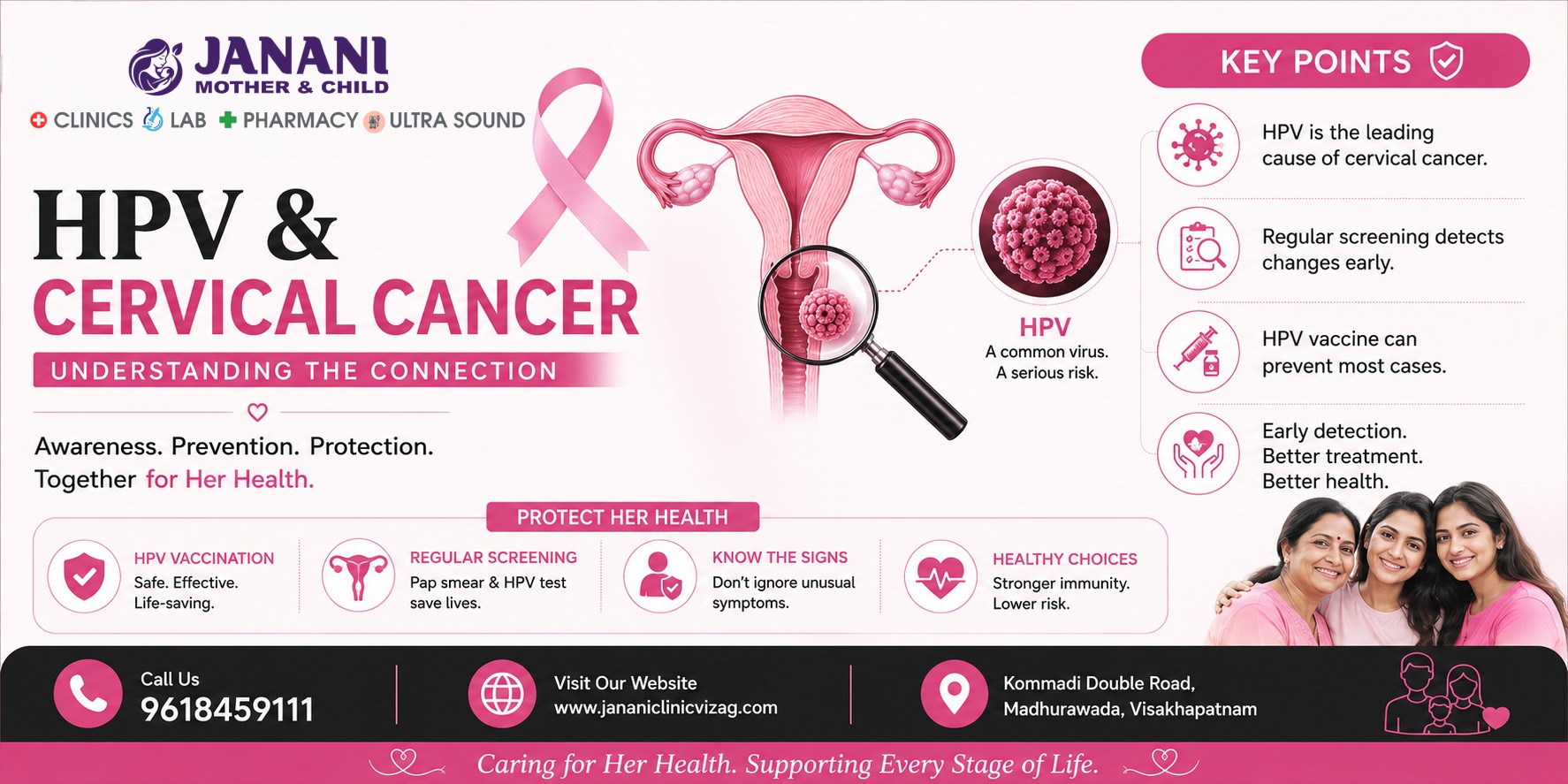
Cervical cancer is one of the most preventable forms of cancer, yet it continues to affect thousands of women every year. The primary cause of most cervical cancers is a common virus known as Human Papillomavirus (HPV). The good news is that with regular screening, HPV vaccination, and timely treatment, cervical cancer can often be prevented.
At Janani Mother & Child Hospital, we believe that awareness and early detection are the keys to protecting women’s health. Understanding the connection between HPV and cervical cancer can help you make informed decisions for yourself and your loved ones.
What is HPV?
Human Papillomavirus (HPV) is a group of more than 100 related viruses. It is one of the most common sexually transmitted infections worldwide.
Most HPV infections cause no symptoms and disappear on their own. However, certain high-risk types of HPV, especially HPV 16 and HPV 18, can cause abnormal changes in the cells of the cervix that may develop into cervical cancer if left untreated.
How Does HPV Cause Cervical Cancer?
When high-risk HPV infects the cervix, it can cause changes in the cervical cells over several years.
In most women, the immune system clears the infection naturally. However, if the infection persists, abnormal cells may gradually develop into precancerous lesions, which can eventually progress to cervical cancer if not detected and treated early.
This process usually takes several years, making regular screening extremely important.
Who is at Risk?
Any woman who has been exposed to HPV can be at risk, but certain factors increase the likelihood of persistent infection, including:
▸ Persistent high-risk HPV infection
▸ Smoking
▸ A weakened immune system
▸ Early sexual activity
▸ Multiple sexual partners
▸ Long-term use of certain contraceptives (as advised by your doctor)
▸ Not attending regular cervical screening
Having one or more risk factors does not mean you will develop cervical cancer, but regular check-ups become even more important.
What Are the Symptoms?
Early HPV infection and early cervical cell changes often cause no symptoms.
As cervical cancer develops, symptoms may include:
▸ Unusual vaginal bleeding
▸ Bleeding after sexual intercourse
▸ Bleeding after menopause
▸ Persistent pelvic pain
▸ Pain during intercourse
▸ Unusual vaginal discharge
These symptoms can also occur with other conditions, so it’s important to seek medical evaluation rather than self-diagnosing.
How Can Cervical Cancer Be Prevented?
The good news is that cervical cancer is largely preventable.
HPV Vaccination
The HPV vaccine protects against the most common high-risk HPV types responsible for cervical cancer.
It is most effective when given before exposure to HPV, typically during adolescence, but many adults may also benefit. Speak with your doctor about whether vaccination is appropriate for you.
Regular Cervical Screening
Routine Pap smear and HPV testing help detect abnormal cervical cells before they become cancerous.
Finding these changes early allows for simple and effective treatment.
Healthy Lifestyle Choices
You can also reduce your risk by:
▸ Avoiding smoking
▸ Practicing safer sex
▸ Maintaining regular gynecological check-ups
▸ Following your doctor’s screening recommendations
How is HPV Diagnosed?
HPV infection is usually detected through:
▸ HPV DNA testing
▸ Pap smear (cervical cytology)
▸ Colposcopy, if abnormal screening results are found
▸ Cervical biopsy when necessary
These tests help identify abnormal changes early, often before symptoms appear.
Treatment Options
Treatment depends on the findings.
Options may include:
▸ Regular monitoring
▸ Removal of abnormal cervical cells
▸ Colposcopy-guided procedures
▸ LEEP (Loop Electrosurgical Excision Procedure)
▸ Minor surgical treatments
▸ Cancer treatment if diagnosed at an advanced stage
Most women diagnosed with precancerous changes can be treated successfully before cancer develops.
When Should You See a Gynecologist?
Consult your gynecologist if you:
▸ Are due for a Pap smear
▸ Have never received an HPV vaccine
▸ Experience abnormal vaginal bleeding
▸ Notice unusual vaginal discharge
▸ Have pelvic pain or pain during intercourse
▸ Receive an abnormal Pap smear result
Never ignore persistent symptoms, even if they seem mild.
HPV is common, but cervical cancer is often preventable. By staying informed, getting vaccinated when appropriate, attending regular cervical screening, and seeking timely medical care, women can greatly reduce their risk.
At Janani Mother & Child Hospital, Dr. Chelamkuri Mrudula is committed to providing comprehensive women’s healthcare—from preventive screenings and HPV vaccination to advanced diagnostic and treatment services. Our compassionate team is here to support you at every stage of your health journey.
