


- admin
- July 10, 2026
- No Comments
Blog Details
What is Hysteroscopy? A Simple Guide to Diagnosis and Treatment
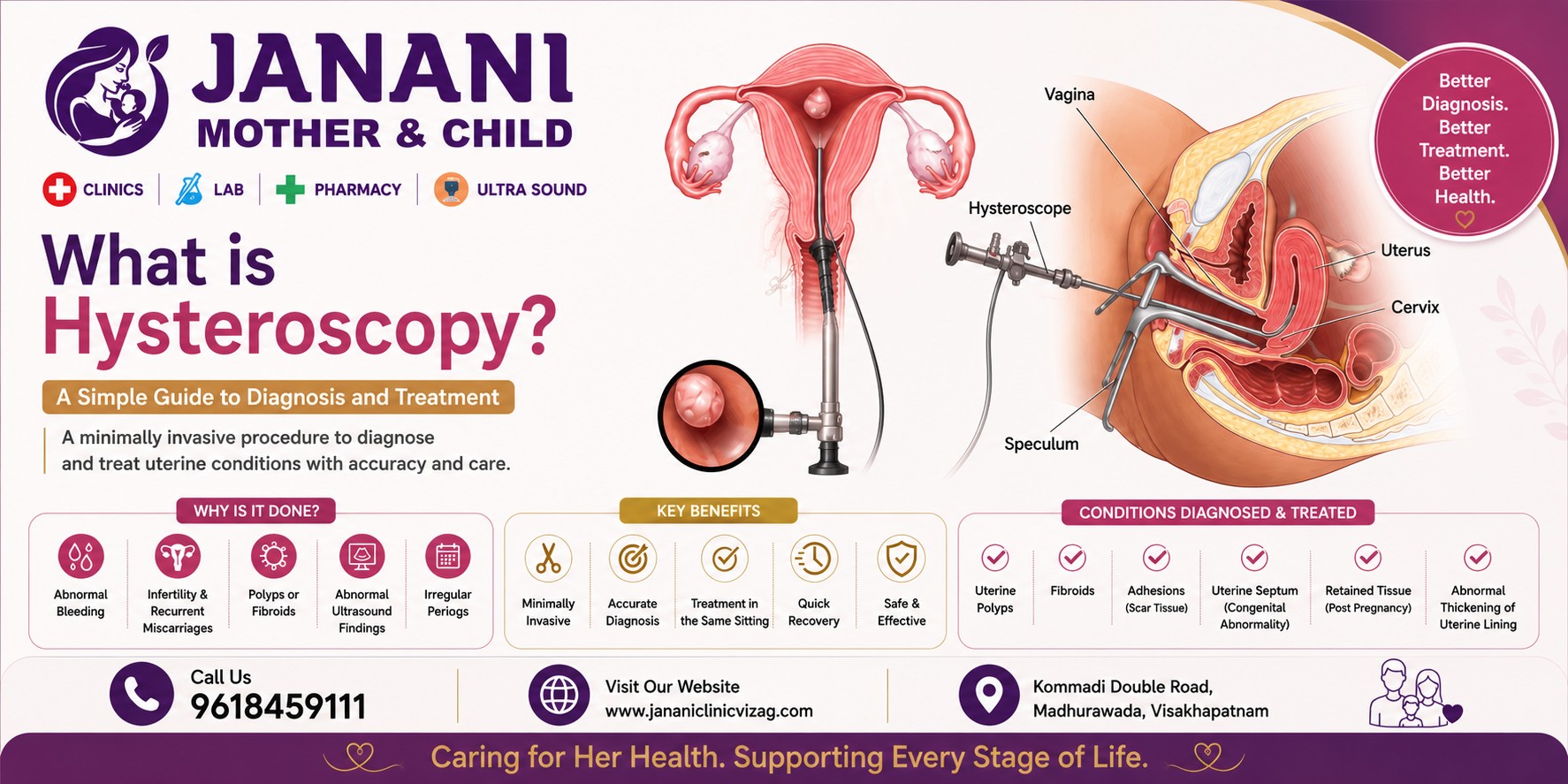
Many women experience symptoms such as abnormal uterine bleeding, infertility, recurrent miscarriages, or severe menstrual pain without knowing the exact cause. In many cases, a procedure called hysteroscopy can help diagnose and even treat these conditions without the need for major surgery.
At Janani Mother & Child Hospital, we use advanced hysteroscopy techniques to provide accurate diagnosis and minimally invasive treatment, helping women recover quickly and return to their daily lives with confidence.
What is Hysteroscopy?
A hysteroscopy is a minimally invasive procedure that allows a gynecologist to examine the inside of the uterus using a thin, lighted instrument called a hysteroscope.
The hysteroscope is gently inserted through the vagina and cervix into the uterus, allowing the doctor to view the uterine cavity on a monitor without making any external incisions.
Depending on the findings, the procedure may be used for diagnosis or to perform minor treatments during the same session.
Why is Hysteroscopy Performed?
Your doctor may recommend hysteroscopy if you have:
▸ Abnormal or heavy menstrual bleeding
▸ Bleeding after menopause
▸ Irregular periods
▸ Infertility or difficulty conceiving
▸ Recurrent miscarriages
▸ Suspected uterine polyps or fibroids
▸ Scar tissue inside the uterus
▸ An abnormal ultrasound result
It helps identify the exact cause of symptoms and guides the most appropriate treatment.
Conditions That Can Be Diagnosed
Hysteroscopy can help diagnose:
▸ Uterine polyps
▸ Fibroids inside the uterus
▸ Uterine septum (a congenital abnormality)
▸ Adhesions (scar tissue)
▸ Abnormal thickening of the uterine lining
▸ Retained pregnancy tissue
▸ Other abnormalities affecting fertility or menstrual health
Can Hysteroscopy Also Treat These Conditions?
Yes. One of the biggest advantages of hysteroscopy is that many conditions can be treated during the same procedure.
Your doctor may remove:
▸ Small uterine polyps
▸ Certain fibroids
▸ Scar tissue (adhesions)
▸ Uterine septum
▸ Retained tissue after pregnancy
This often eliminates the need for more invasive surgery.
What Happens During the Procedure?
A hysteroscopy usually takes 15–30 minutes, depending on whether it is diagnostic or operative.
During the procedure:
▸ You will lie comfortably on an examination table.
▸ The hysteroscope is gently inserted through the vagina and cervix into the uterus.
▸ Sterile fluid is used to expand the uterus for a clearer view.
▸ The doctor carefully examines the uterine cavity.
▸ If necessary, small instruments can be passed through the hysteroscope to perform treatment.
Most procedures are completed as day-care procedures, allowing patients to return home the same day.
Is Hysteroscopy Painful?
Most women experience only mild discomfort.
Depending on the type of procedure, your doctor may recommend:
▸ Local anesthesia
▸ Sedation
▸ Short general anesthesia
Some women experience mild cramping similar to menstrual cramps after the procedure, which usually settles within a day or two.
Recovery After Hysteroscopy
Recovery is generally quick.
You may experience:
▸ Mild cramping
▸ Light spotting
▸ Temporary watery discharge
Most women can resume normal daily activities within 24–48 hours, although your doctor may advise avoiding heavy exercise and sexual intercourse for a short period.
Benefits of Hysteroscopy
Compared with traditional surgery, hysteroscopy offers several advantages:
▸ No external cuts or stitches
▸ Minimally invasive procedure
▸ Accurate diagnosis
▸ Treatment during the same procedure
▸ Less pain and discomfort
▸ Faster recovery
▸ Short hospital stay
▸ Quick return to daily activities
Frequently Asked Questions
Is hysteroscopy safe?
Yes. Hysteroscopy is considered a safe and commonly performed gynecological procedure when carried out by experienced specialists.
Will I need to stay in the hospital?
Most hysteroscopy procedures are performed as day-care procedures, allowing you to go home the same day.
Can hysteroscopy improve fertility?
In some women, removing uterine polyps, fibroids, adhesions, or correcting uterine abnormalities may improve fertility and increase the chances of a healthy pregnancy.
Hysteroscopy is a safe, minimally invasive procedure that plays an important role in diagnosing and treating many uterine conditions. Whether you’re experiencing abnormal bleeding, fertility concerns, or recurrent pregnancy loss, hysteroscopy can provide valuable answers and effective treatment with minimal discomfort and a quick recovery.
At Janani Mother & Child Hospital, we are committed to providing advanced, compassionate care using modern diagnostic and treatment techniques. If you’re experiencing persistent gynecological symptoms, don’t ignore them-early evaluation can lead to better outcomes and improved quality of life.
