


- admin
- June 15, 2026
- No Comments
Blog Details
What is Laparoscopic Surgery? Benefits & Recovery
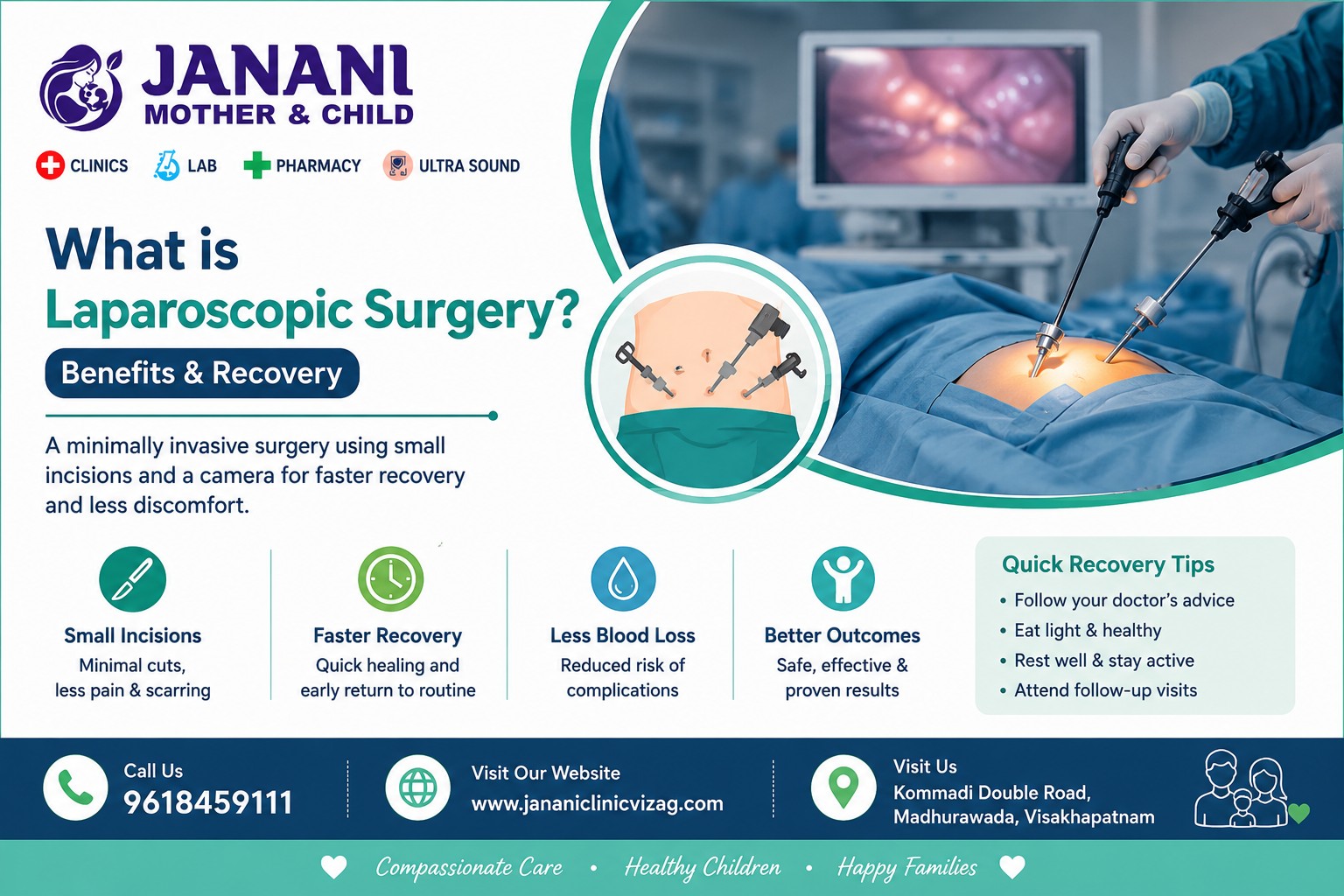
Advances in medical technology have transformed the way many surgical procedures are performed. One of the most significant developments is laparoscopic surgery, often called minimally invasive surgery or keyhole surgery.
Compared to traditional open surgery, laparoscopic procedures typically involve smaller incisions, less pain, and faster recovery. Today, laparoscopic surgery is widely used in gynecology and general surgery for diagnosing and treating various conditions.
At Janani Mother & Child, we are committed to providing modern, safe, and effective treatment options that support faster healing and better patient outcomes.
What is Laparoscopic Surgery?
Laparoscopic surgery is a surgical technique that uses a thin instrument called a laparoscope, which contains a small camera and light.
During the procedure:
▸ Small incisions are made in the abdomen.
▸ The laparoscope is inserted through one incision.
▸ Specialized surgical instruments are inserted through additional small openings.
▸ The surgeon views the internal organs on a monitor and performs the procedure with precision.
Because the incisions are much smaller than those used in traditional surgery, recovery is often quicker and more comfortable.
When is Laparoscopic Surgery Used?
Laparoscopic surgery is commonly used to diagnose and treat a variety of gynecological conditions, including:
▸ Ovarian cyst removal
▸ Fibroid treatment
▸ Endometriosis treatment
▸ Ectopic pregnancy management
▸ Hysterectomy (uterus removal)
▸ Tubal procedures
▸ Investigation of infertility-related conditions
Your doctor will determine whether laparoscopic surgery is appropriate based on your condition and overall health.
Benefits of Laparoscopic Surgery
One of the main reasons laparoscopic surgery has become so popular is the range of benefits it offers compared to traditional open surgery.
1. Smaller Incisions
Tiny incisions result in:
▸ Less tissue damage
▸ Smaller scars
▸ Improved cosmetic appearance
Many patients appreciate the minimal scarring after recovery.
2. Less Pain After Surgery
Smaller incisions generally mean less discomfort following the procedure.
Patients often require fewer pain medications and experience a more comfortable recovery period.
3. Faster Recovery
Most patients recover more quickly after laparoscopic surgery than after open surgery.
Benefits may include:
▸ Earlier return to normal activities
▸ Shorter hospital stay
▸ Reduced downtime
Recovery times vary depending on the procedure performed.
4. Lower Risk of Infection
Because the incisions are smaller, there is generally a reduced risk of wound-related complications and infections.
Proper post-operative care further helps support healing.
5. Reduced Blood Loss
Laparoscopic procedures often involve less blood loss compared to traditional surgery, contributing to safer outcomes and smoother recovery.
What to Expect During Recovery
Recovery experiences vary depending on the specific procedure and individual patient factors.
Immediately after surgery, you may experience:
▸ Mild abdominal discomfort
▸ Temporary bloating
▸ Fatigue
▸ Shoulder pain caused by the gas used during surgery
These symptoms usually improve within a few days.
Recovery Tips
Follow Your Doctor’s Instructions
Carefully follow all post-operative guidance regarding:
▸ Medications
▸ Activity levels
▸ Wound care
▸ Follow-up appointments
Stay Active – But Gradually
Light walking is often encouraged to improve circulation and reduce the risk of complications.
Avoid strenuous activities until your doctor approves.
Eat a Balanced Diet
Healthy nutrition supports healing and recovery.
Focus on:
🥗 Fruits and vegetables
🍲 Protein-rich foods
💧 Adequate hydration
🌾 Whole grains
Monitor Your Incisions
Contact your doctor if you notice:
▸ Increasing redness
▸ Swelling
▸ Fever
▸ Unusual discharge
▸ Severe pain
Early attention helps prevent complications.
When Should You Contact Your Doctor?
Seek medical advice if you experience:
▸ Persistent fever
▸ Severe abdominal pain
▸ Excessive bleeding
▸ Difficulty breathing
▸ Persistent vomiting
▸ Signs of infection around the incision sites
Prompt evaluation ensures safe recovery.
Is Laparoscopic Surgery Safe?
Laparoscopic surgery is generally considered safe and effective when performed by trained and experienced surgeons.
Like all surgical procedures, it carries some risks, but for many patients, the benefits often outweigh the potential complications.
Your doctor will discuss the risks and benefits specific to your condition before recommending surgery.
Modern Surgical Care for Better Recovery
Laparoscopic surgery has revolutionized the treatment of many gynecological conditions by offering smaller incisions, less pain, faster recovery, and excellent outcomes.
If you are experiencing symptoms related to fibroids, ovarian cysts, endometriosis, or other gynecological concerns, early consultation can help determine the most appropriate treatment option.
At Janani Mother & Child, our experienced specialists provide comprehensive evaluation, advanced surgical care, and compassionate support to help women achieve better health and faster recovery.
Schedule a consultation today to learn whether laparoscopic surgery may be the right option for you.
